Final Assembly

Where everything comes together.
Home
Automotive
Final Assembly
Final assembly has the lowest level of automation in the plant and the highest number of variants. Every module that goes in is expensive, heavy and has to pass through an opening that was not designed for it.
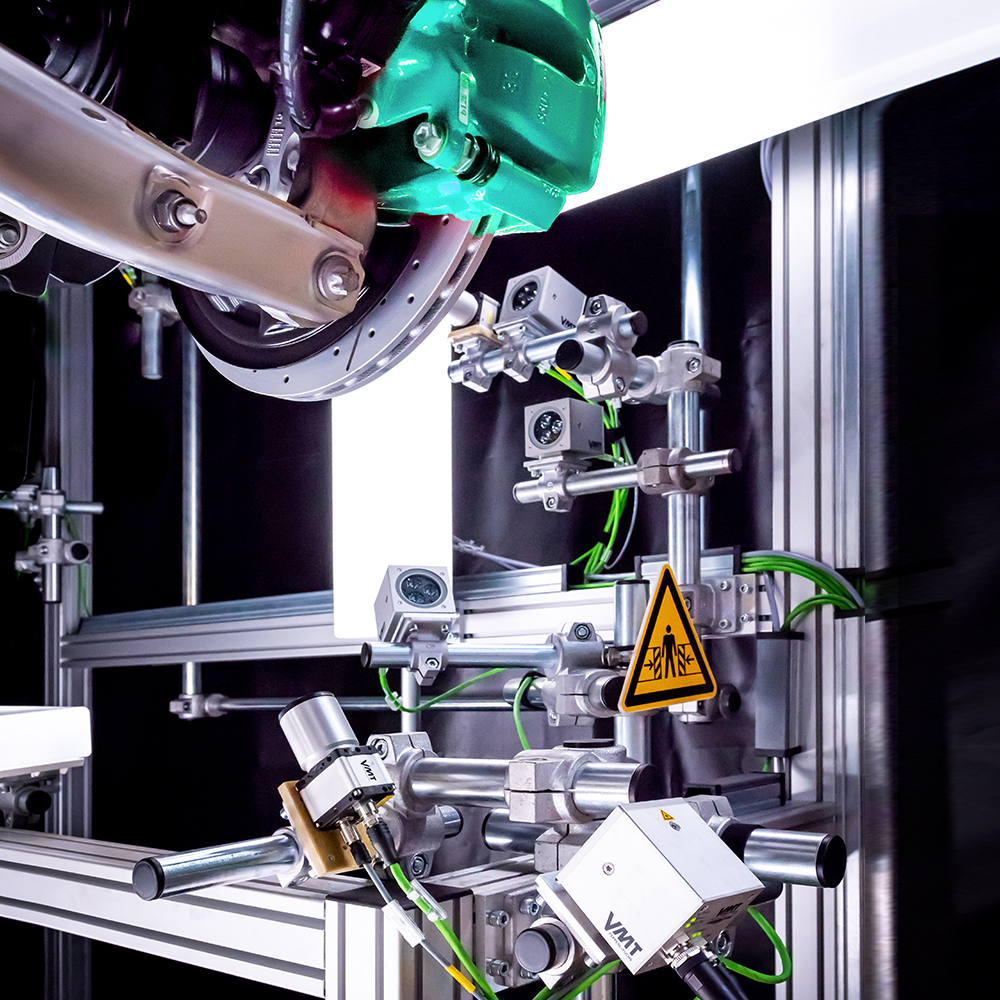
Robots place cockpit, glass, roof module, drive unit, seats and wheels into a body that hangs in a carrier and never stops in exactly the same spot. The system measures the real position and the real free space before anything moves.
What gets inspected here is what the customer sees and what the warranty pays for. Gap and flush on every attachment part, adhesive beads before the glass covers them, plugs before water finds them, and the correct variant of every visible feature. On every vehicle, not on a sample.

One Process. Every Step Covered.

The right technology at every stage.
01

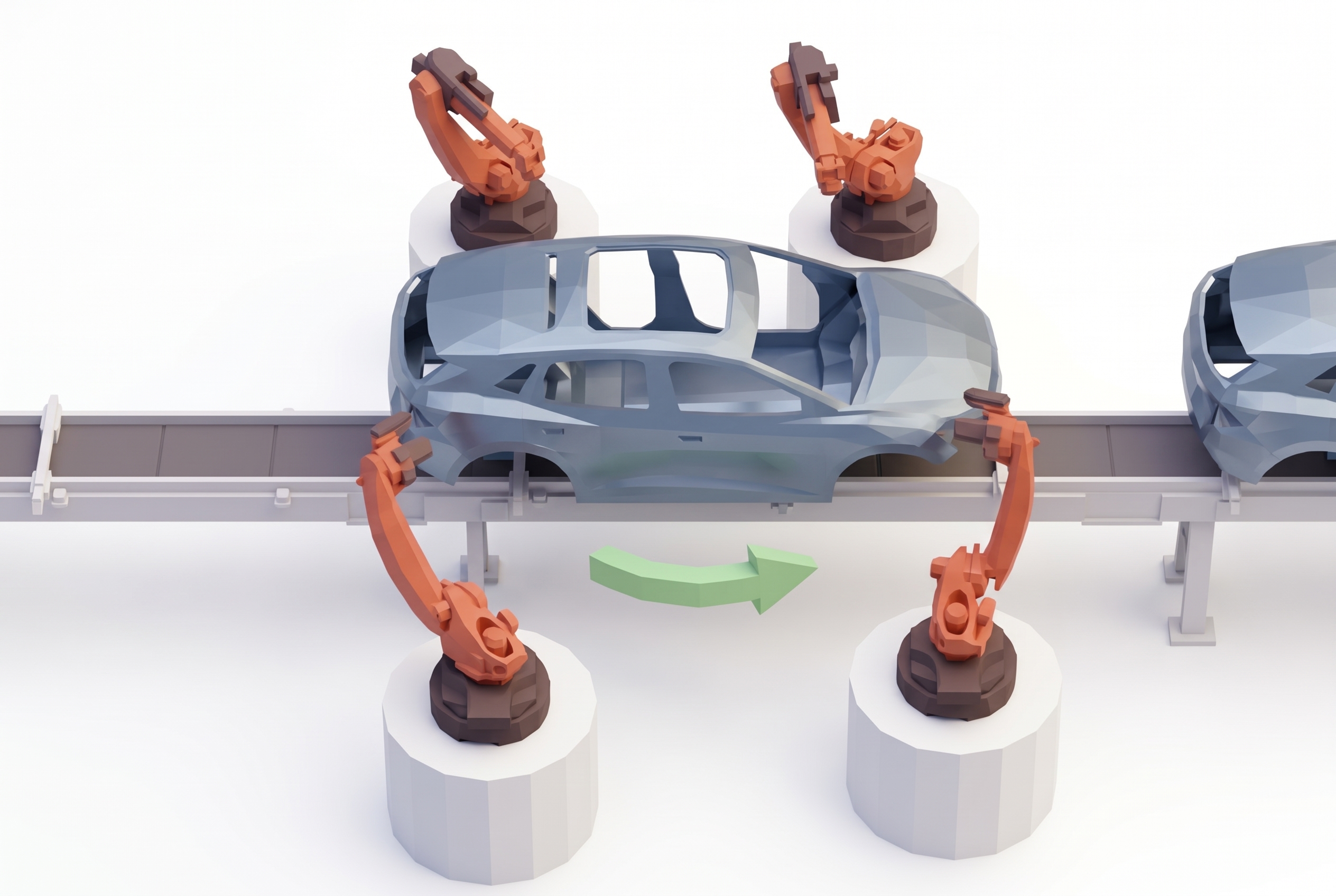
Body positioning for robot processes

  • Along the entire assembly line, robots need to know the exact body position – for windshield installation, seat insertion, or door hanging.
  • One measurement, multiple applications – a single system guides several robot processes in the same station, flexible for mixed model production.
  • 3D position measurement of the body as reference for downstream robot operations, compensation of overhead conveyor variation.
  • Technology: VMT 3DLE | VMT OSC
02

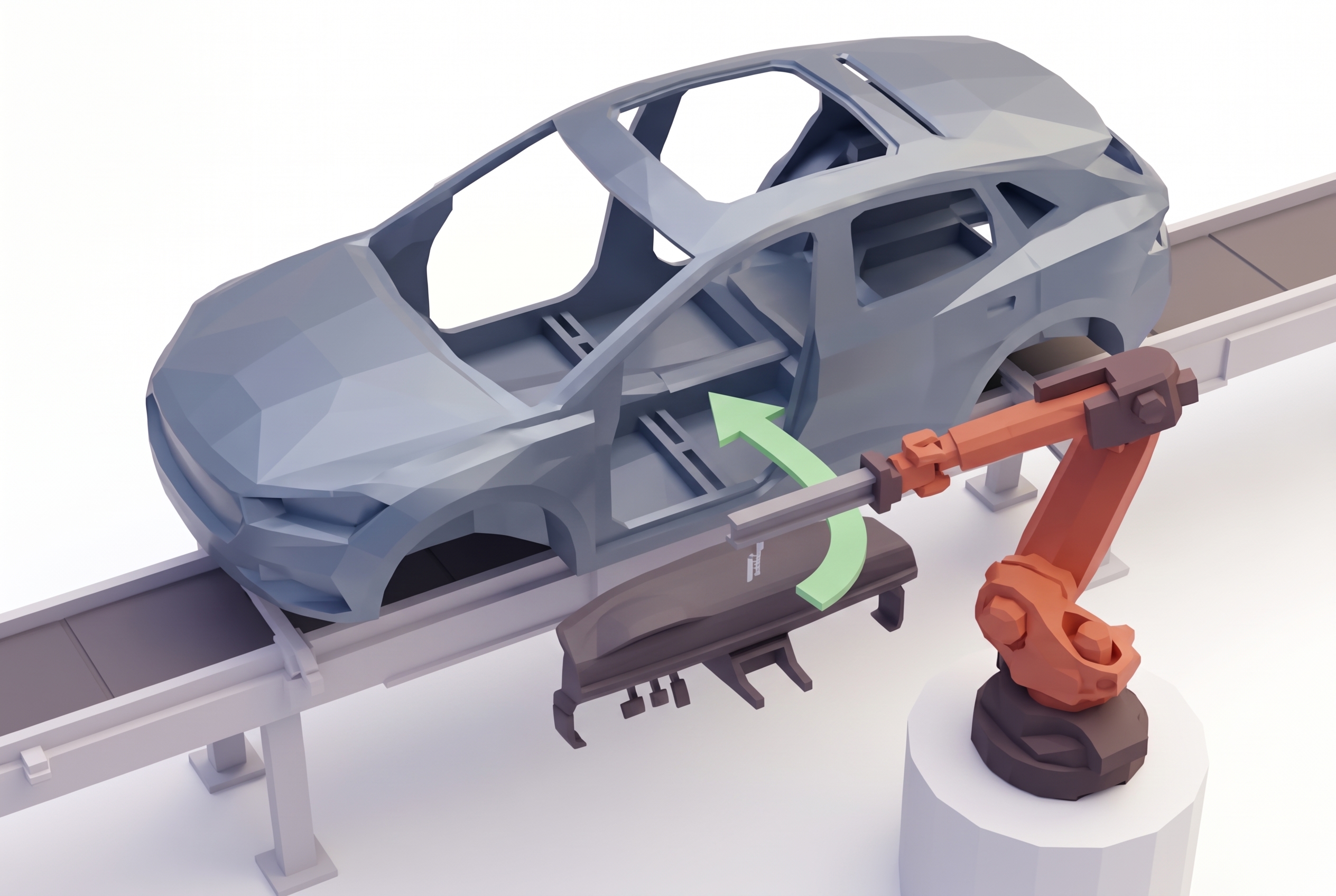
Cockpit installation

  • The cockpit is one of the largest modules in the vehicle and it has to pass through the door opening with centimetres to spare.
  • Body position is measured and the installation space is checked in 3D during insertion, so no cable, connector or trim part gets trapped.
  • No contact between module and B-pillar, no damaged cockpit, no harness pulled out of its clip.
  • Technology: VMT OSC | VMT ClearSpace
03

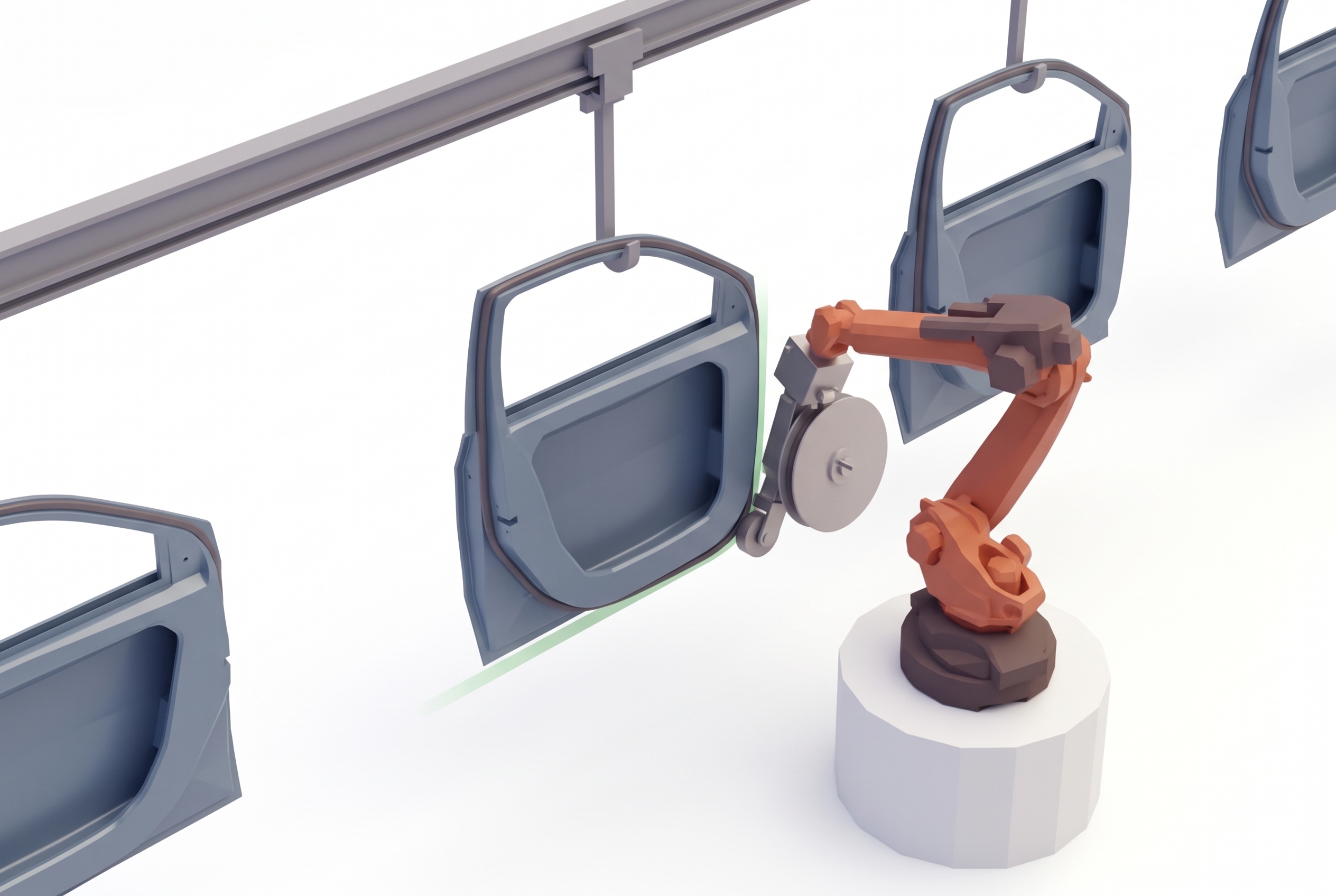
Door seal application

  • Doors are lifted off their hangers for trim work and re-hung afterwards, and the seal has to be rolled onto a contour that varies from door to door.
  • De-racking and re-hanging are robot-guided, and the real door geometry is measured so the roller path follows it instead of a taught nominal path.
  • A seal that sits tight all around, on every variant, without re-teaching for each door type.
  • Technology: VMT OSC | VMT BK | VMT CloudBK
04

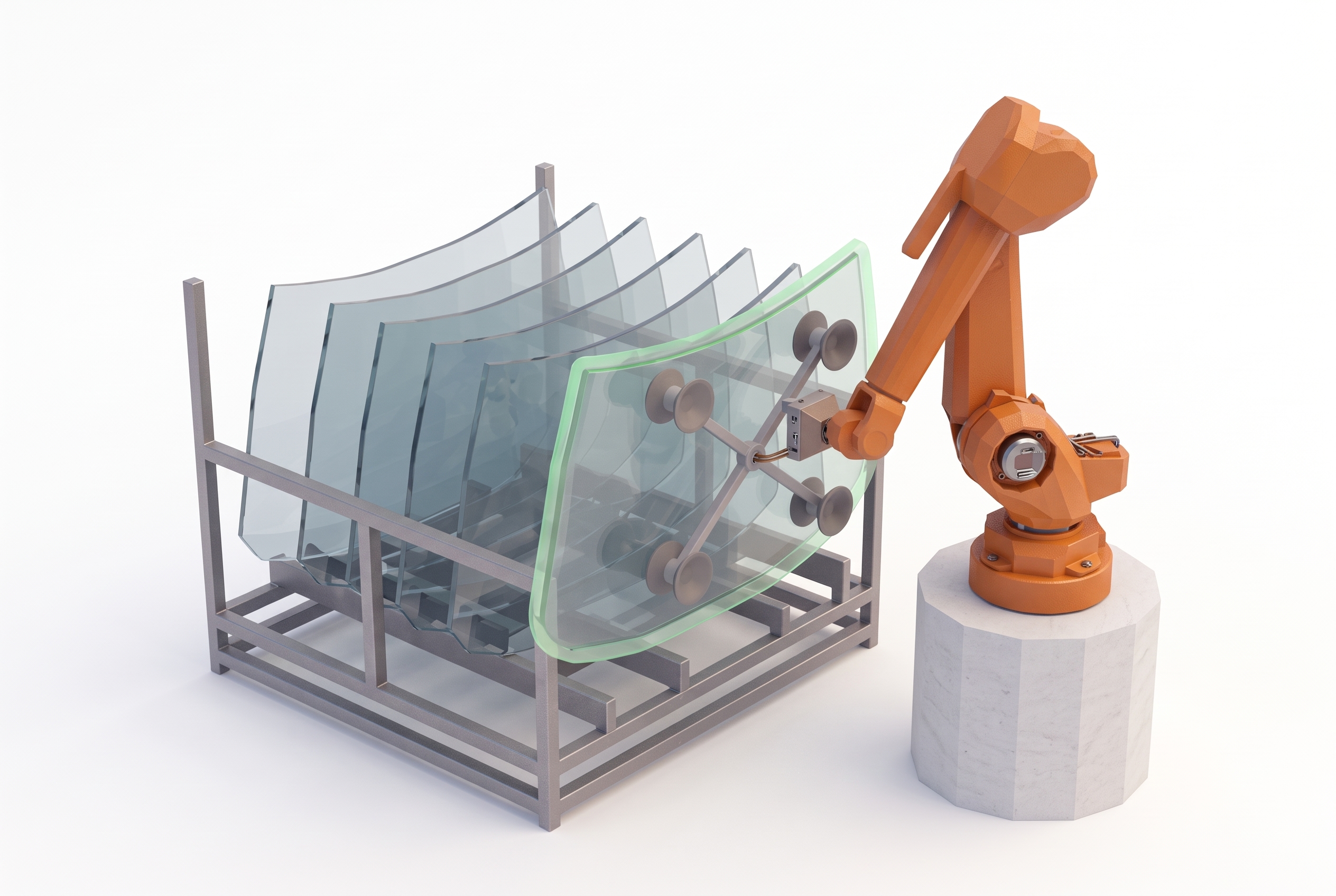
Part de-racking

  • Attachment parts arrive in racks and containers, and no two parts sit in exactly the same position in the nest.
  • The part contour is measured in the rack so the robot grips each part at the right point, even glass, which tolerates the least.
  • No edge damage, no breakage, and no teach-in per rack type.
  • Technology: VMT BK
05

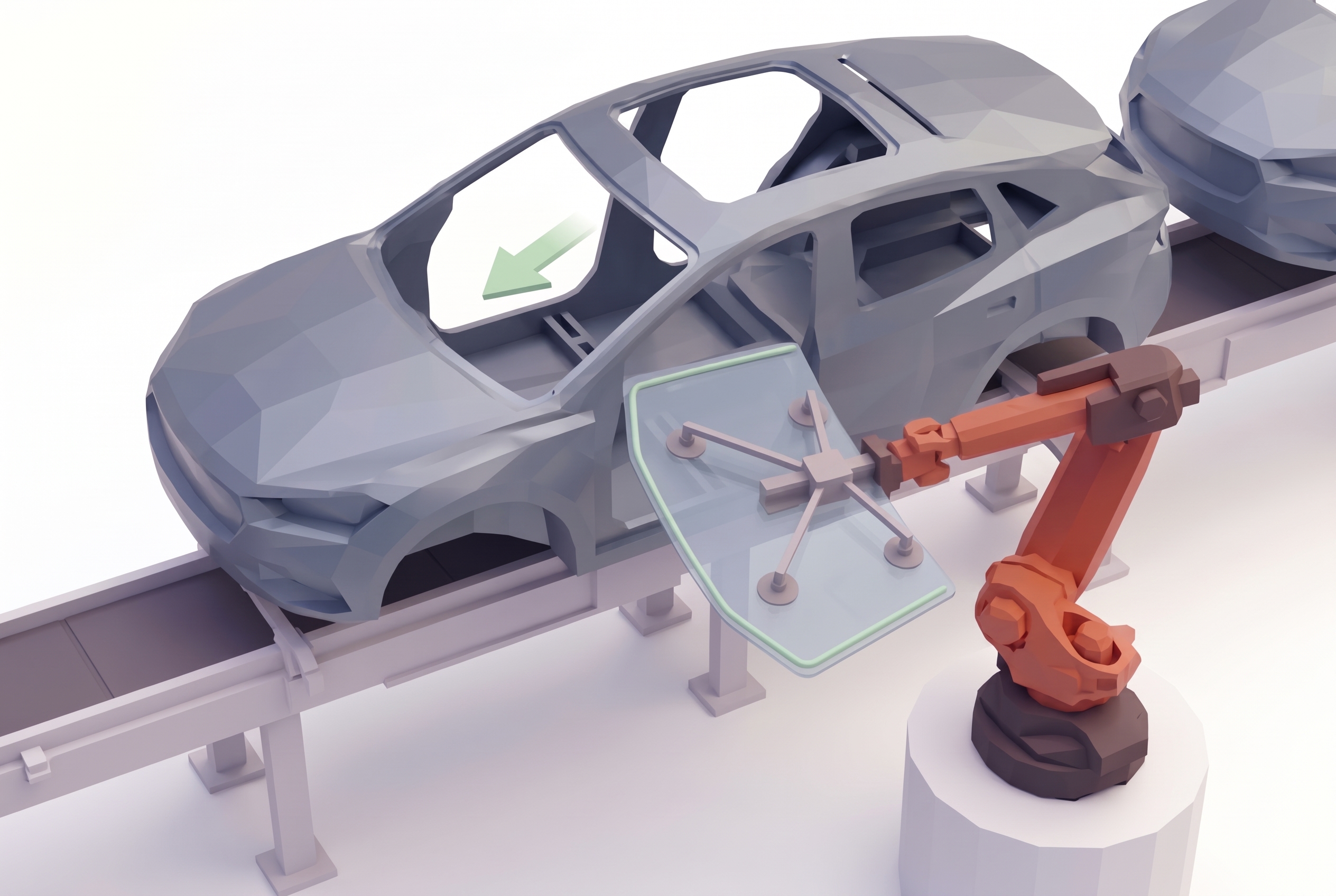
Glazing and roof modules

  • Windscreen, backlight and panoramic roof are bonded, not bolted. This is a structural, safety-relevant joint, and there is no second attempt once the adhesive touches the body.
  • Primer and adhesive bead are inspected in 3D for completeness, width, height and position, the body opening is measured, and the robot sets the part into the measured position.
  • An even gap around the glass even as body tolerances vary, and a bonded joint that will not come back as a warranty case.
  • Technology: VMT Sense&Place | VMT SpinTop | VMT BeadMap
06

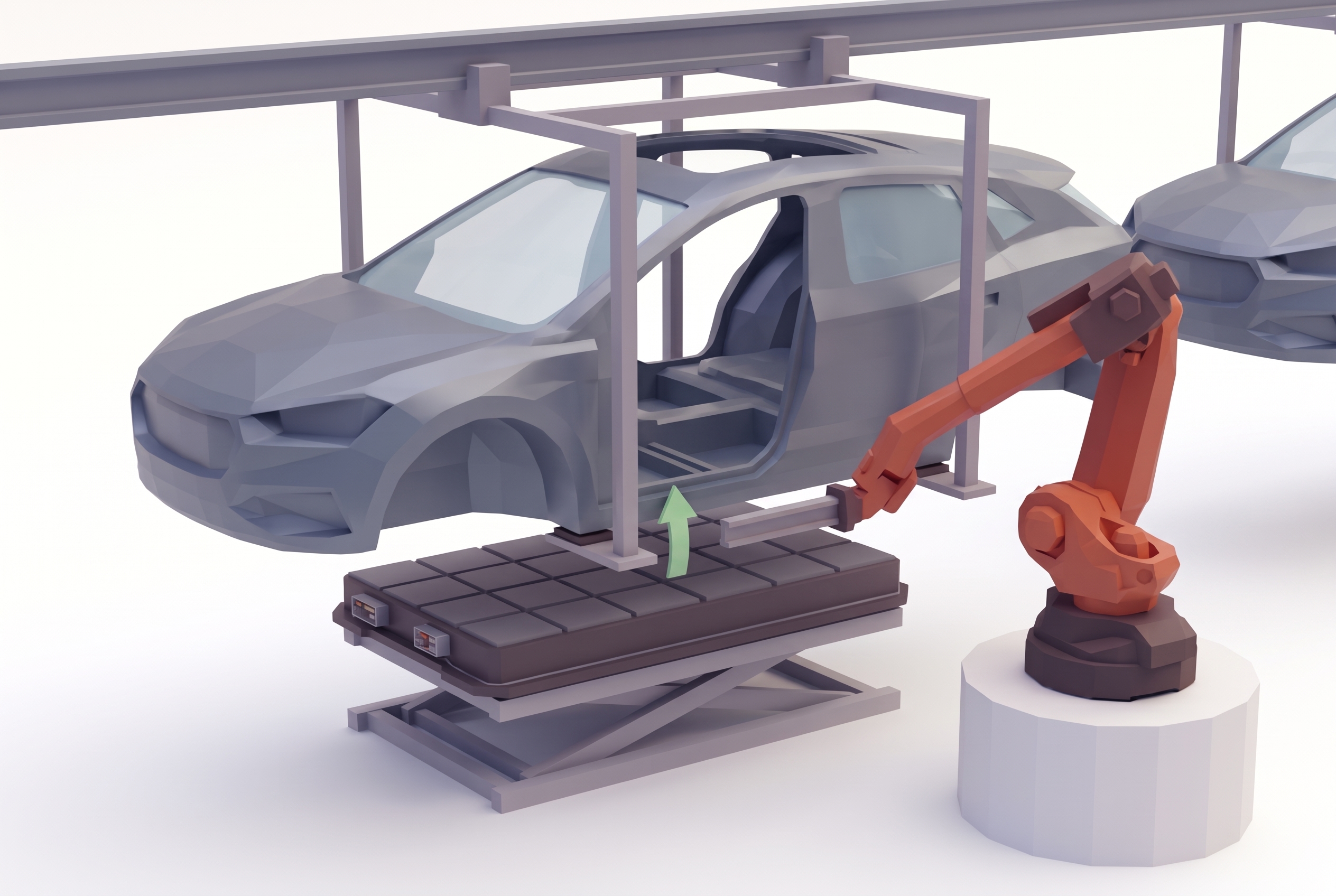
Marriage and battery installation

  • Body and drive unit meet for the first time here, and the bolts have to find their threads while both parts hang in their carriers.
  • Relative position between body and unit is measured before joining, and the space above the battery is checked for foreign parts and damage.
  • Automatic bolting without manual correction, on combustion and BEV platforms running the same line.
  • Technology: VMT Inspection | VMT ClearSpace | VMT 3DPR
07

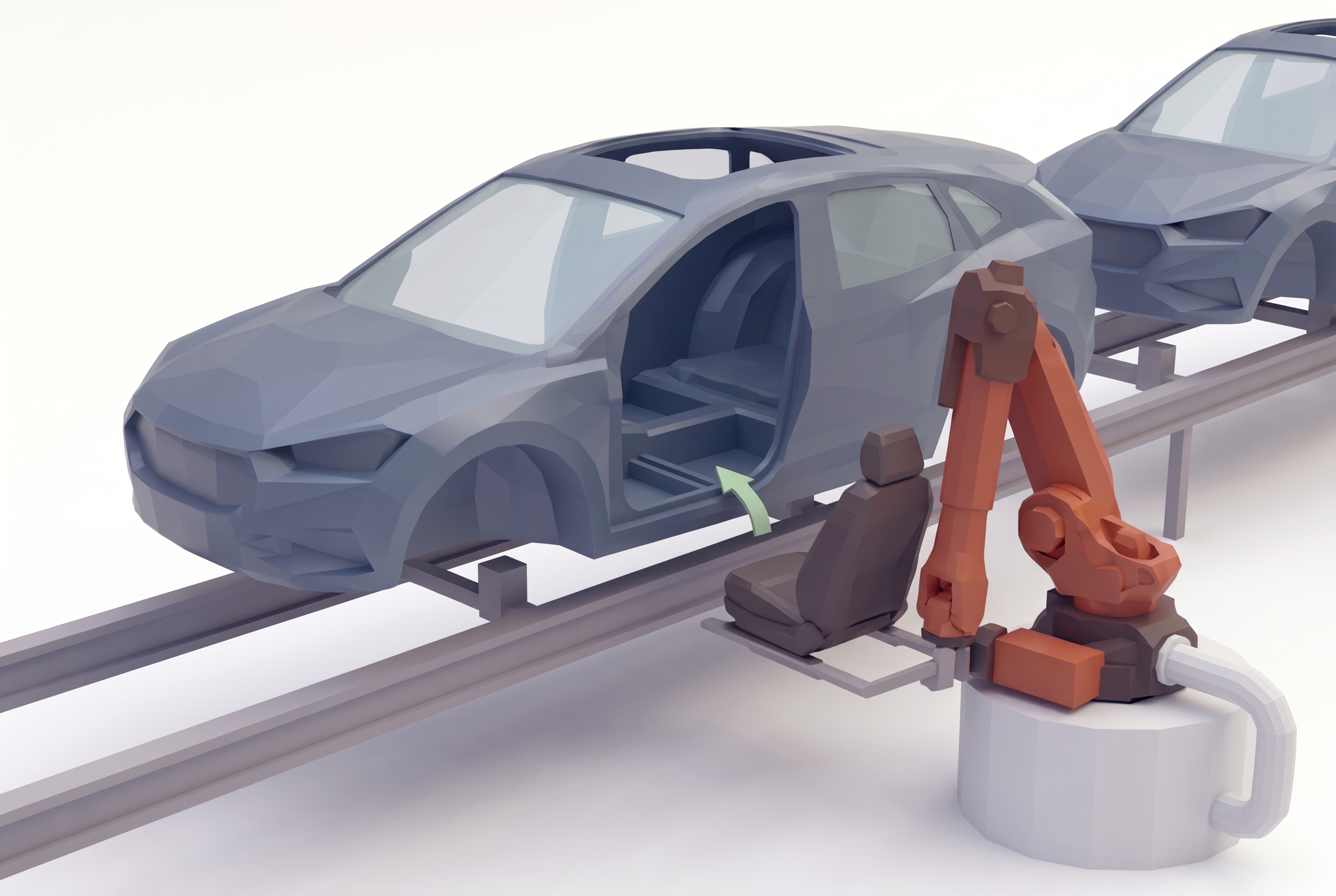
Seats, front end module and HUD

  • Heavy pre-assembled modules go into openings that leave no room for approximation, and the head-up display reacts to a tenth of a degree.
  • Seat rails, installation space and mounting points are measured in 3D so the robot joins the module along a path calculated for this vehicle.
  • No damaged door trim, no rework on the projection geometry, the same station for every seat and equipment variant.
  • Technology: VMT OSC | VMT CloudBK
08

Wheel mounting

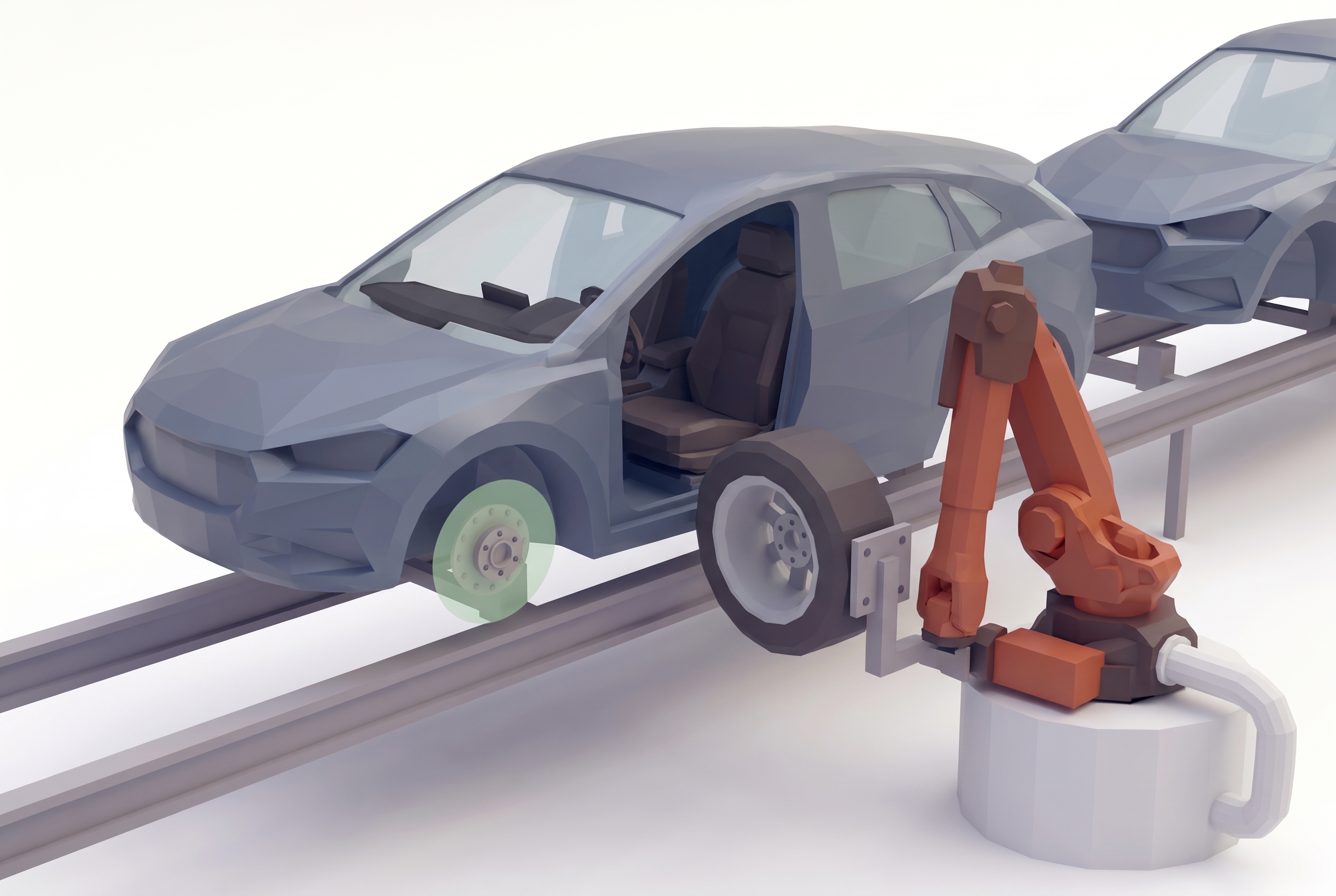
  • Wheels are mounted on the moving line, and hub and bolt pattern come to a different angular position on every vehicle.
  • Wheel and hub position are detected so the bolting tool docks at the correct angle.
  • No manual alignment, no cross-threaded bolts, no line stop to mount a wheel.
  • Technology: VMT OSC
09

Gap and flush

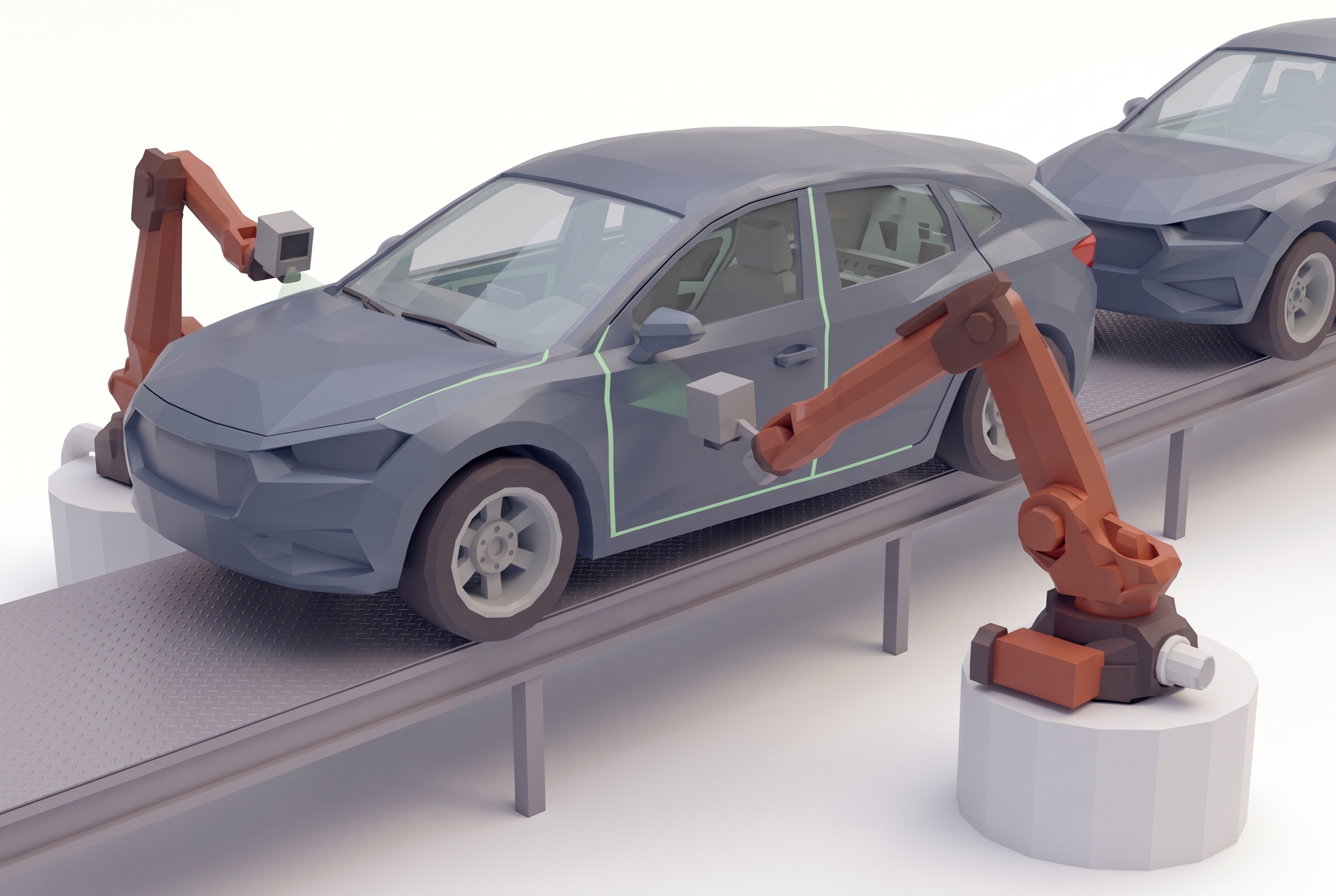
  • Gap and flush is the one quality attribute your customer judges without instruments, standing next to the car.
  • Gap and flush are measured along doors, hoods and lids, with gauge simulation reproducing the result a hand gauge would return, so your existing tolerances stay valid.
  • Every vehicle instead of a sample, results handed straight to the plant quality system.
  • Technology: VMT Gap & Flush

10

Completeness and Q-gate inspection

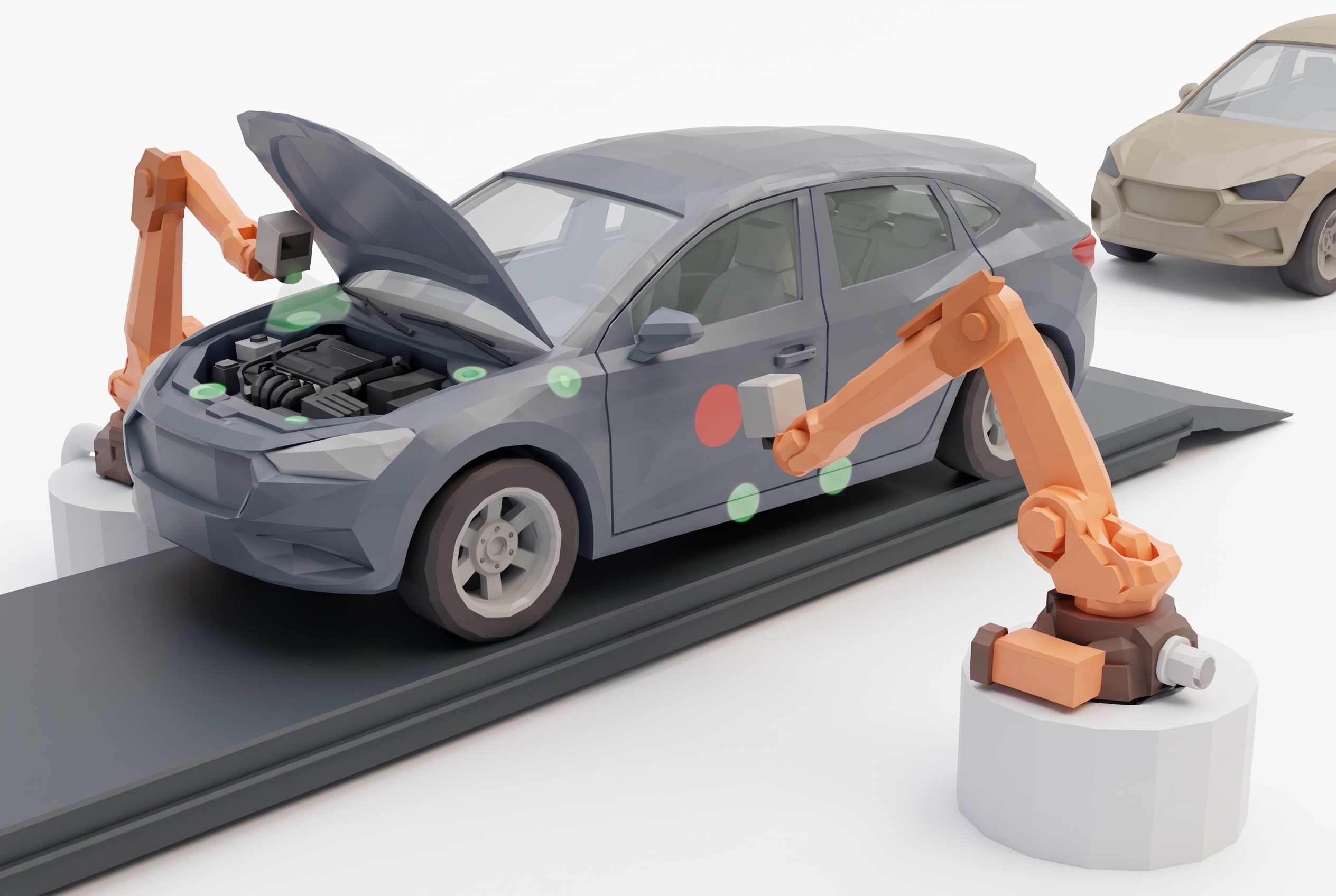
  • After each assembly section someone has to confirm that everything is there: plugs, nuts, labels, screws, covers, and the right variant of each.
  • Plugs are checked for presence and correct seating, underbody, assembly frames and variant-specific features are inspected at the Q-gates, with 3D clearance checks where components have to fit without collision.
  • Missing plugs found before water ingress turns into corrosion, and no vehicle leaving a section on an assumption.
  • Technology: VMT Plug Detection | VMT Inspection | VMT ClearSpace
Back

Our team will be in touch as soon as possible.

FAST RESPONSE TIMES
EXPERT CONSULTING & SUPPORT
SOLUTION-DRIVEN APPROACH
01
02
03
04
Submit
Thank you! Your submission has been received!
Oops! Something went wrong while submitting the form.