Power Train

Power demands precision.
Home
Automotive
Power Train
Two drivetrains, one plant. The combustion unit is machined and bolted, the electric unit is bonded and sealed. Both have tolerances no one can check by eye, and both are closed before anyone gets a second look inside.
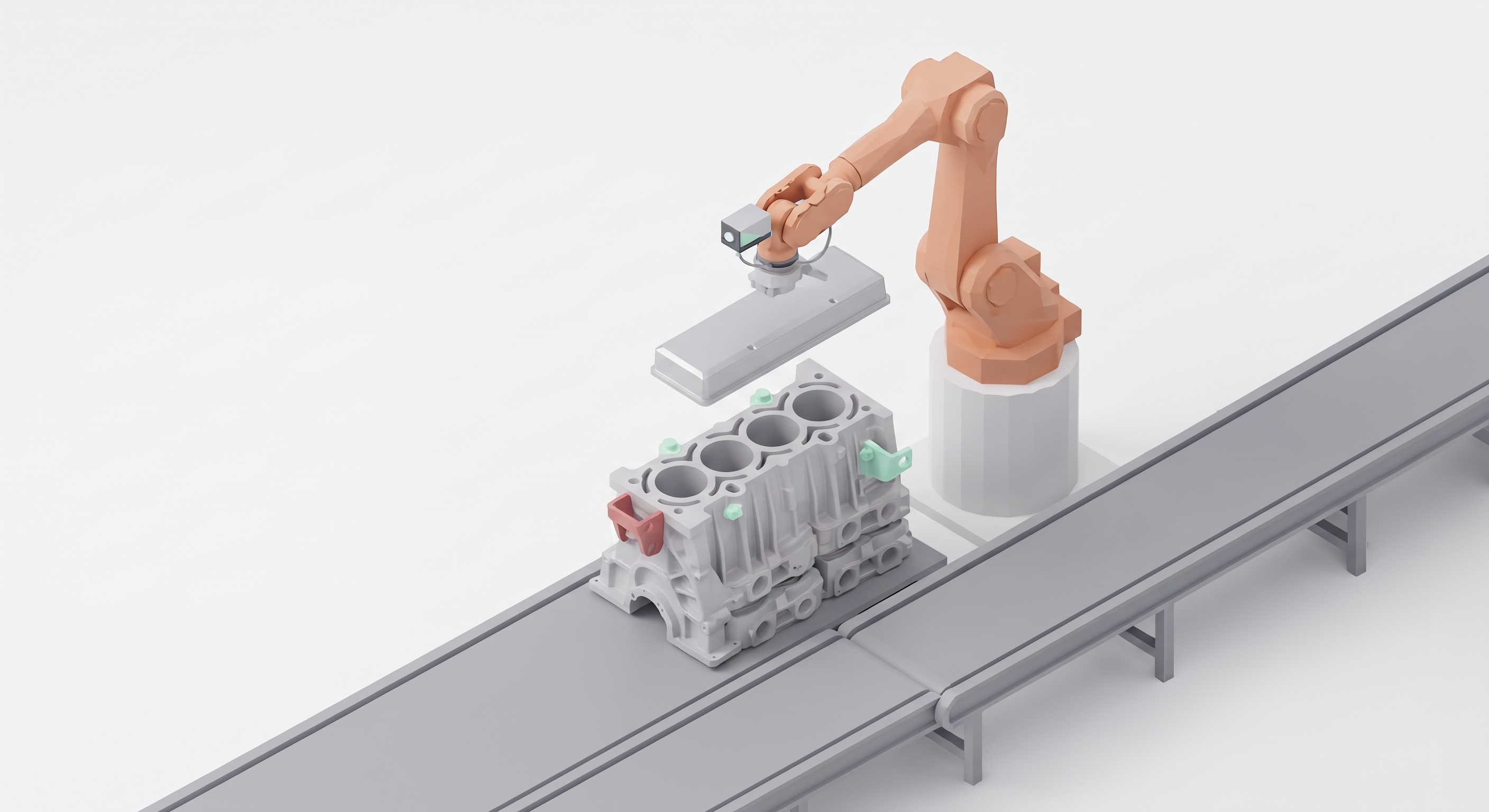
In engine and gearbox assembly, vision guides the handling of heavy castings and confirms that every component is in place before the next step covers it. Sealant beads on oil pans, gearbox covers and housing halves are checked while the flange is still open, because a bead defect found after bolting means disassembly.
On the battery side, the demands shift. Thermal interface material between module and cooling plate, modules set into a housing with millimetre clearances, HV connectors that have to be fully locked before the lid goes on. Each of these becomes inaccessible once the next part is placed, which is why the check belongs inside the process and not at the end of it.

One Process. Every Step Covered.

The right technology at every stage.
01

Internal combustion engine

Casting handling

  • Cylinder heads, crankcases and housings arrive in bins and on pallets, stacked by a process that was never designed for a robot.
  • Part position and orientation are detected in the container so the robot can pick the casting and feed the machining centre.
  • No fixed nests, no manual pre-sorting, and a changeover to a new casting that costs a program instead of a fixture.
  • Technology: VMT OSC
02

Engine assembly inspection

  • Every step in engine assembly covers the step before it. Once the cover is on, the only way to verify what is underneath is to take it off again.
  • Presence, position and orientation of mounted components are verified at each station before access closes.
  • Assembly errors caught at the station that caused them, not at the test bench three hours later.
  • Technology: VMT Inspection

03

Sealant bead application and inspection

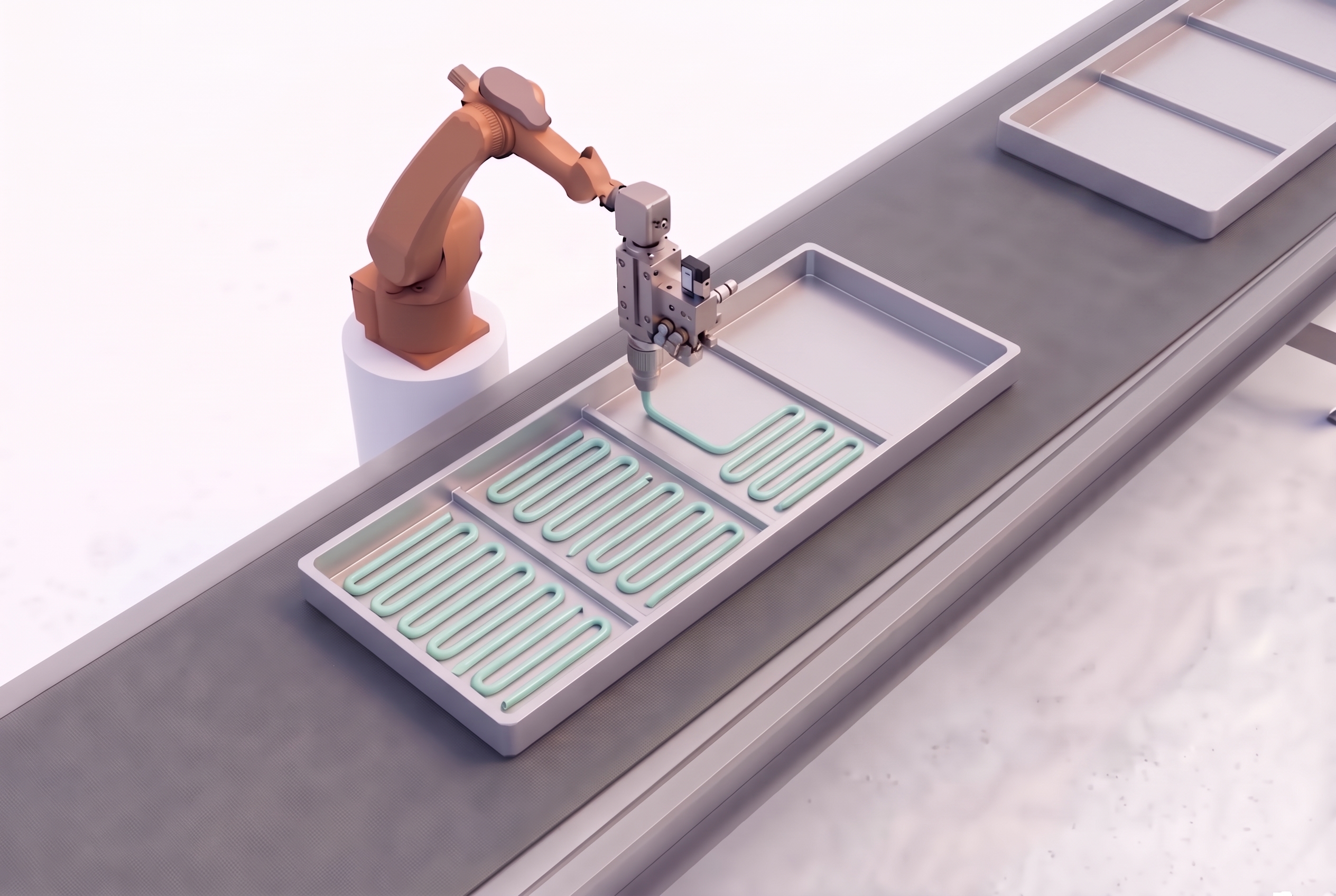
  • Oil pans, gearbox covers and housing halves are sealed, not gasketed. The RTV bead has to be complete, the right width and in the right place, and it is invisible the moment the parts meet.
  • The bead is applied along the measured flange position and checked for interruptions, width and position before the mating part goes on.
  • A leak found on the line instead of in the field, and a sealing process that documents itself.
  • Technology: VMT BeadMap | VMT SpinTop
04

Battery

Gap filler, thermal paste and potting

  • Thermal interface material and potting compound sit between module, housing and cooling plate, invisible from the moment the modules go in. Any gap becomes a hotspot, any void becomes a weak point.
  • The application path follows the measured part position, and coverage is checked for completeness, volume and voids before the next part closes the assembly.
  • Thermal performance that holds over the life of the pack, verified per unit instead of assumed.
  • Technology: VMT BeadMap | VMT SpinTop
05

Module insertion into pack

  • Modules are heavy, expensive and go into a housing with clearances measured in millimetres.
  • The insertion position is referenced to the real housing position so the robot sets the module down without contact.
  • No damaged cell housings, no scratched cooling plate, and the same station for every pack variant.
  • Technology: VMT OSC
06

Connector inspection BMS and HV

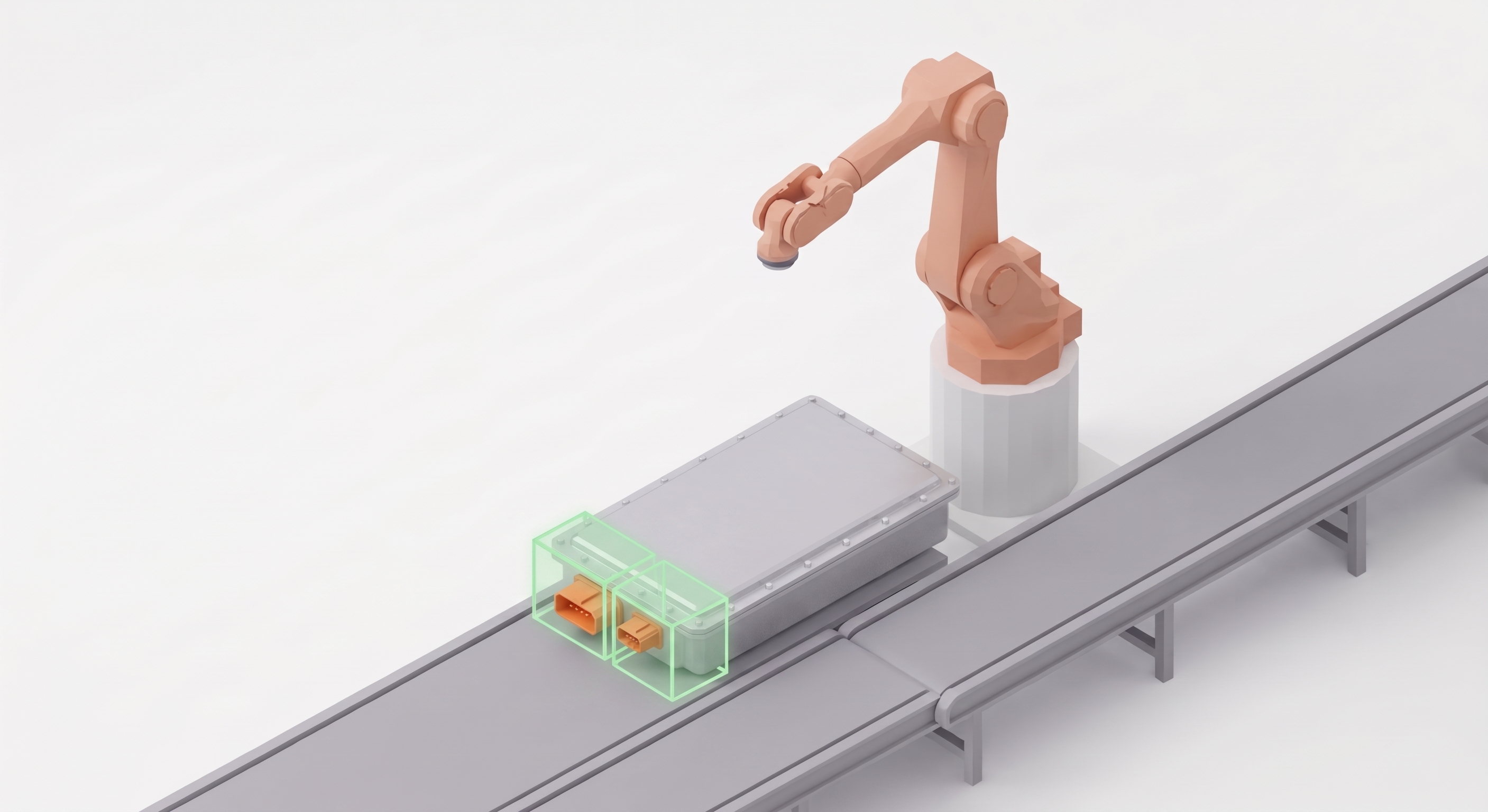
  • Once the lid is bonded, a connector that is seated but not locked costs a full teardown.
  • BMS and HV connectors are verified as fully plugged and locked before the pack is closed.
  • The last open check before the pack becomes a sealed unit.
  • Technology: VMT Inspection
Back

Our team will be in touch as soon as possible.

FAST RESPONSE TIMES
EXPERT CONSULTING & SUPPORT
SOLUTION-DRIVEN APPROACH
01
02
03
04
Submit
Thank you! Your submission has been received!
Oops! Something went wrong while submitting the form.