
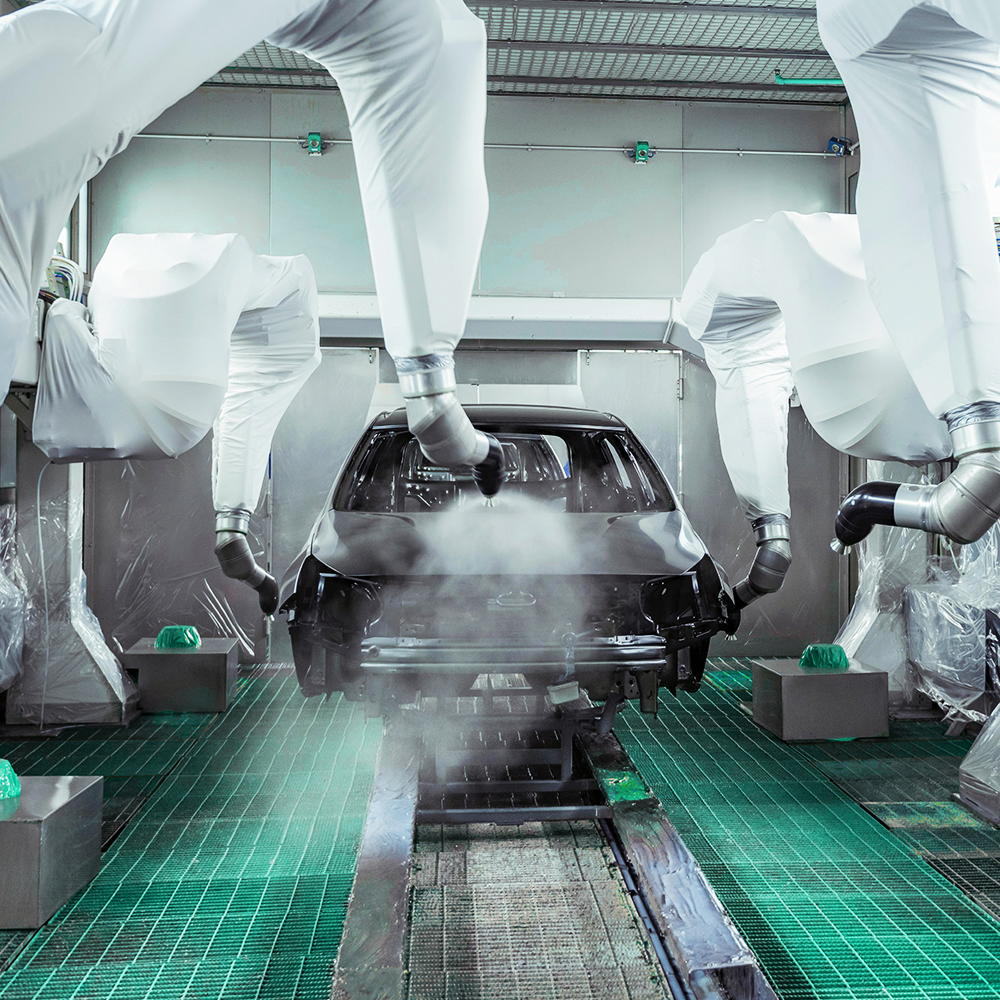
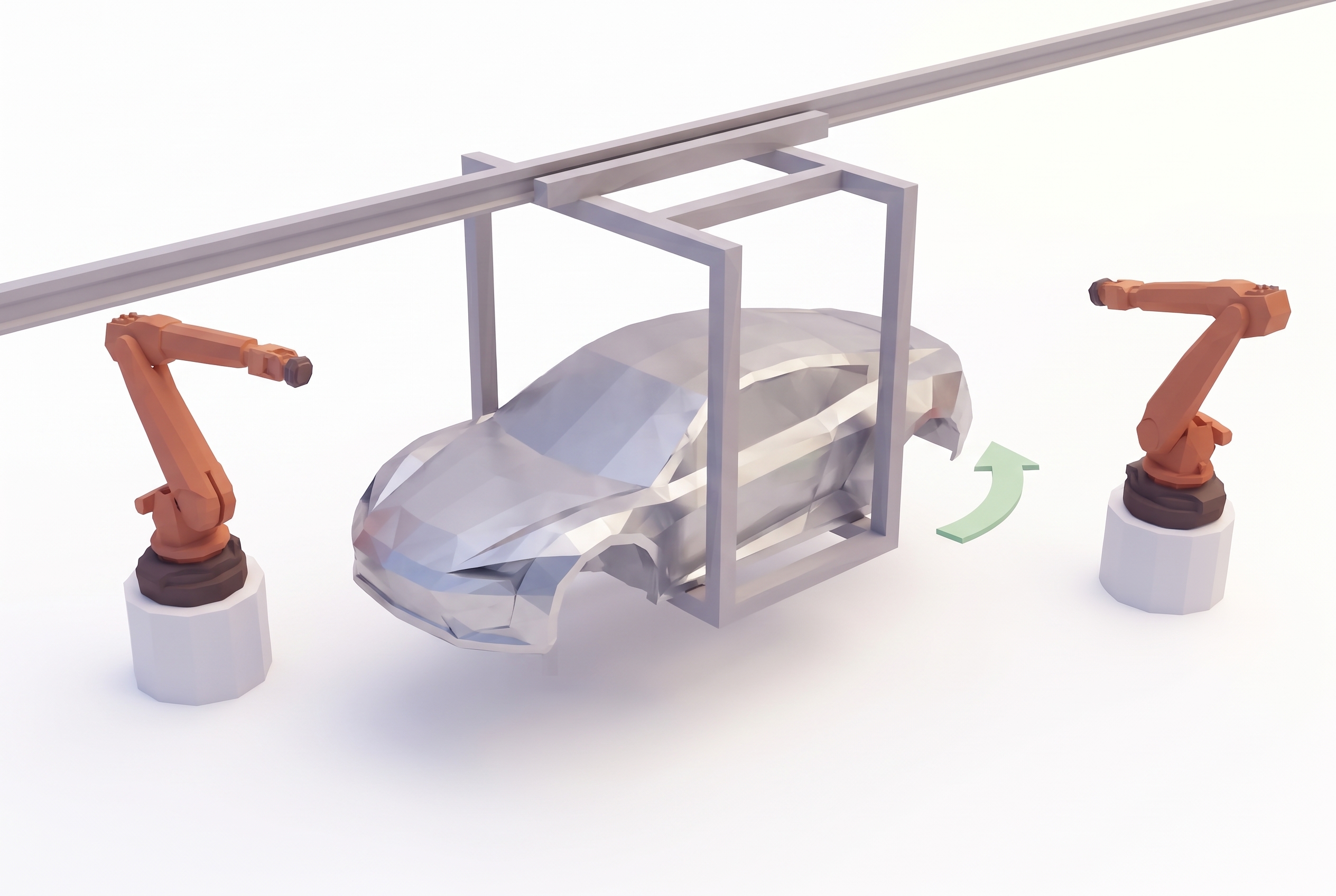
Before KTL dipcoating and every subsequent paint process, the exact body position must be known so robots can operate reliably on a moving hanger system. VMT measures the body's 3D position inline, providing the reference that lets every downstream robot compensate for the position variation of the overhead conveyor— reliably, even in confined paint booths.
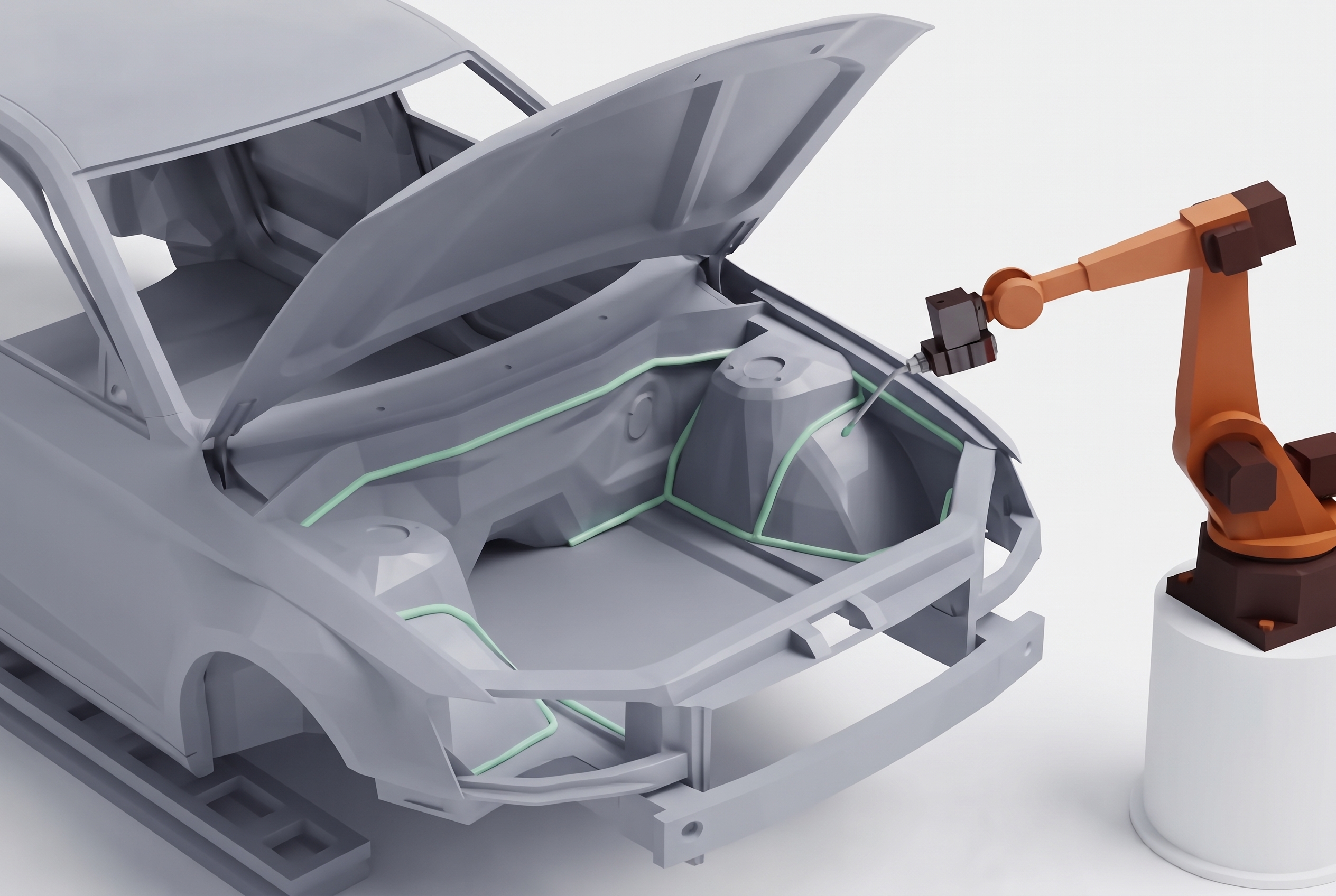
After KTL, exposedand interior seams are sealed with robot-applied compounds, for example alongthe roof, in the engine compartment, and inside the body before furtherassembly. VMT guides the application robot along each seam and inspects theapplied bead for completeness, width, height, and position.
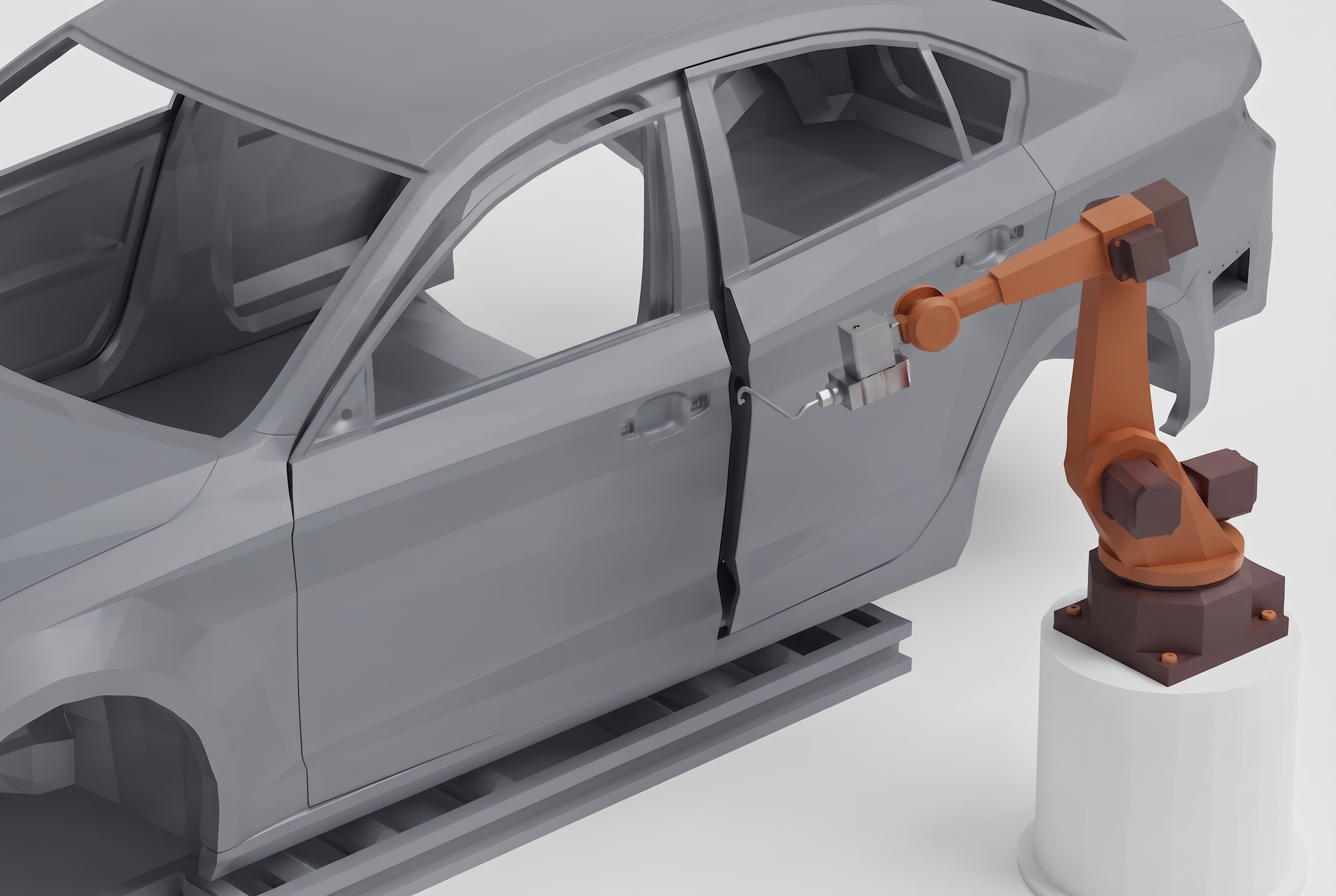
At door flanges and hems, sealant is applied in a very narrow gap, often with the flap closed, at high speed and with no room for error. VMT BK guides the robot precisely along the flange, while VMT ToolBox 3D monitors the nozzle and corrects its position automatically when needed — because the result depends on both the path and thetool. A VMT 3DLE measurement is placed upstream for crash protection.
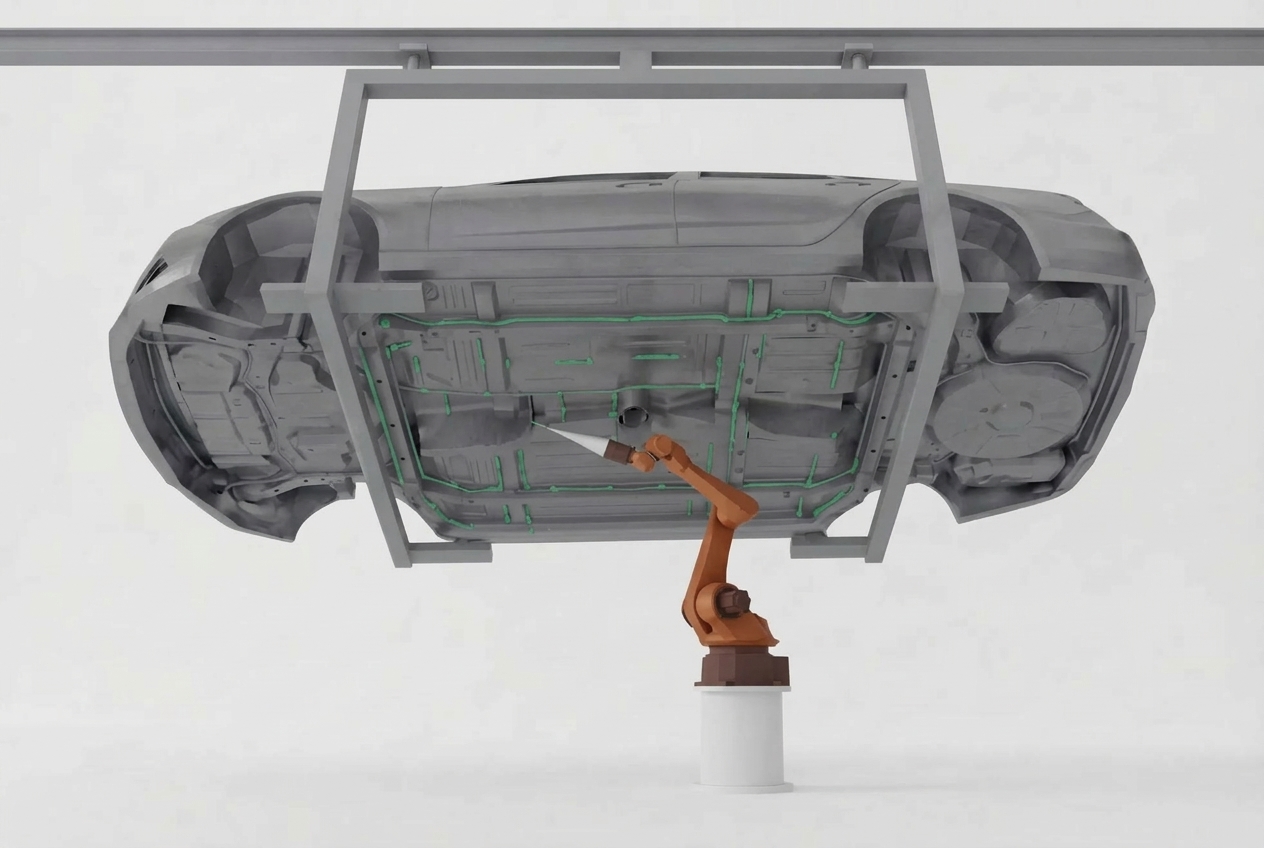
The underbody is coated with protective compound over large areas rather than along defined seams. VMT guides the application robot across the underbody and inspects coverage and application for completeness.
Sprayable acoustic material (SAM/LASD), anti-flutter adhesive (AFA), and noise-damping compounds are applied to defined body areas for NVH performance. VMT verifies application position, coverage, and bead geometry after automated application, with direct robot correction possible where needed. For injection foaming, VMT TwinCam locates the openings precisely so the foam nozzle can enter tight holes reliably.
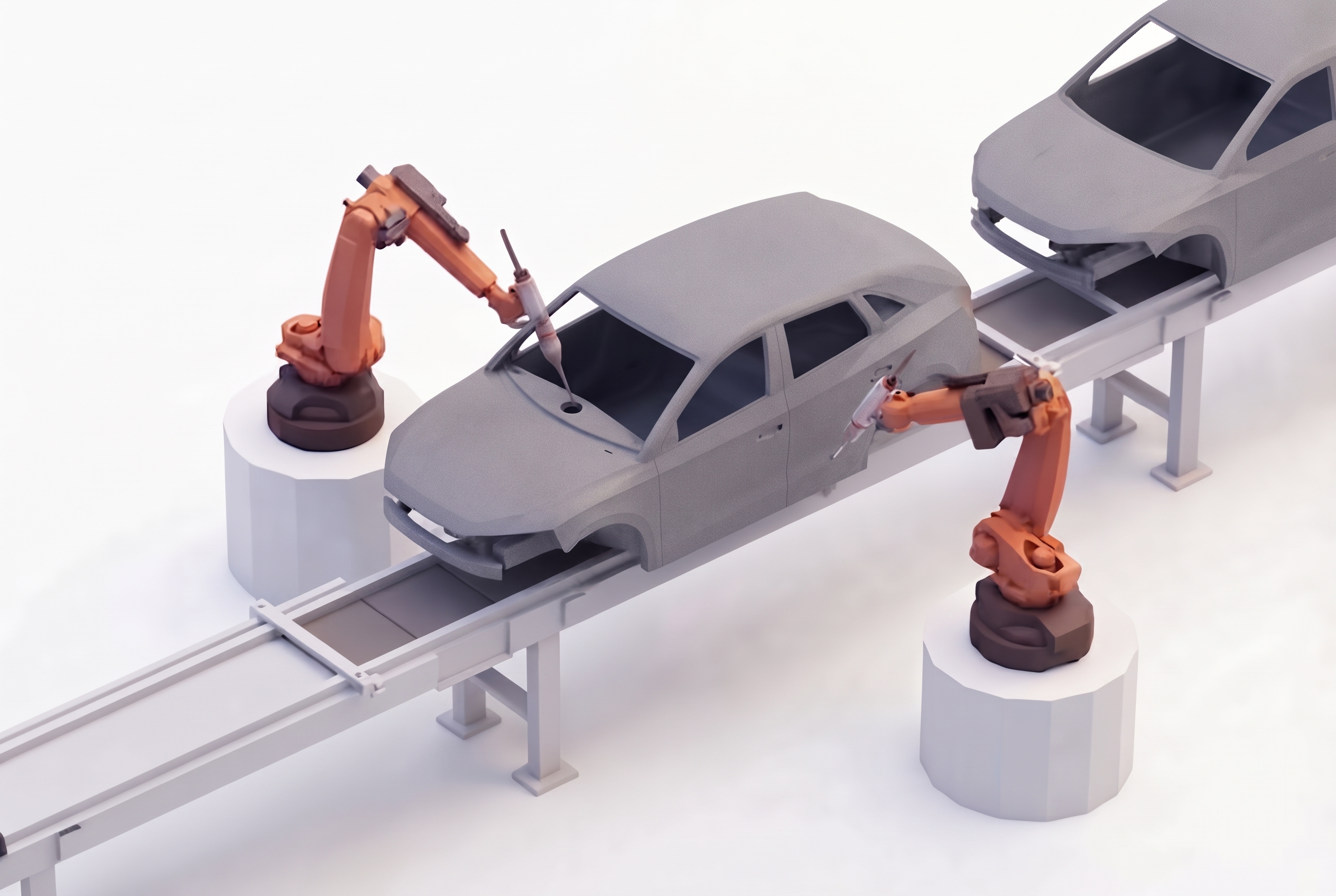
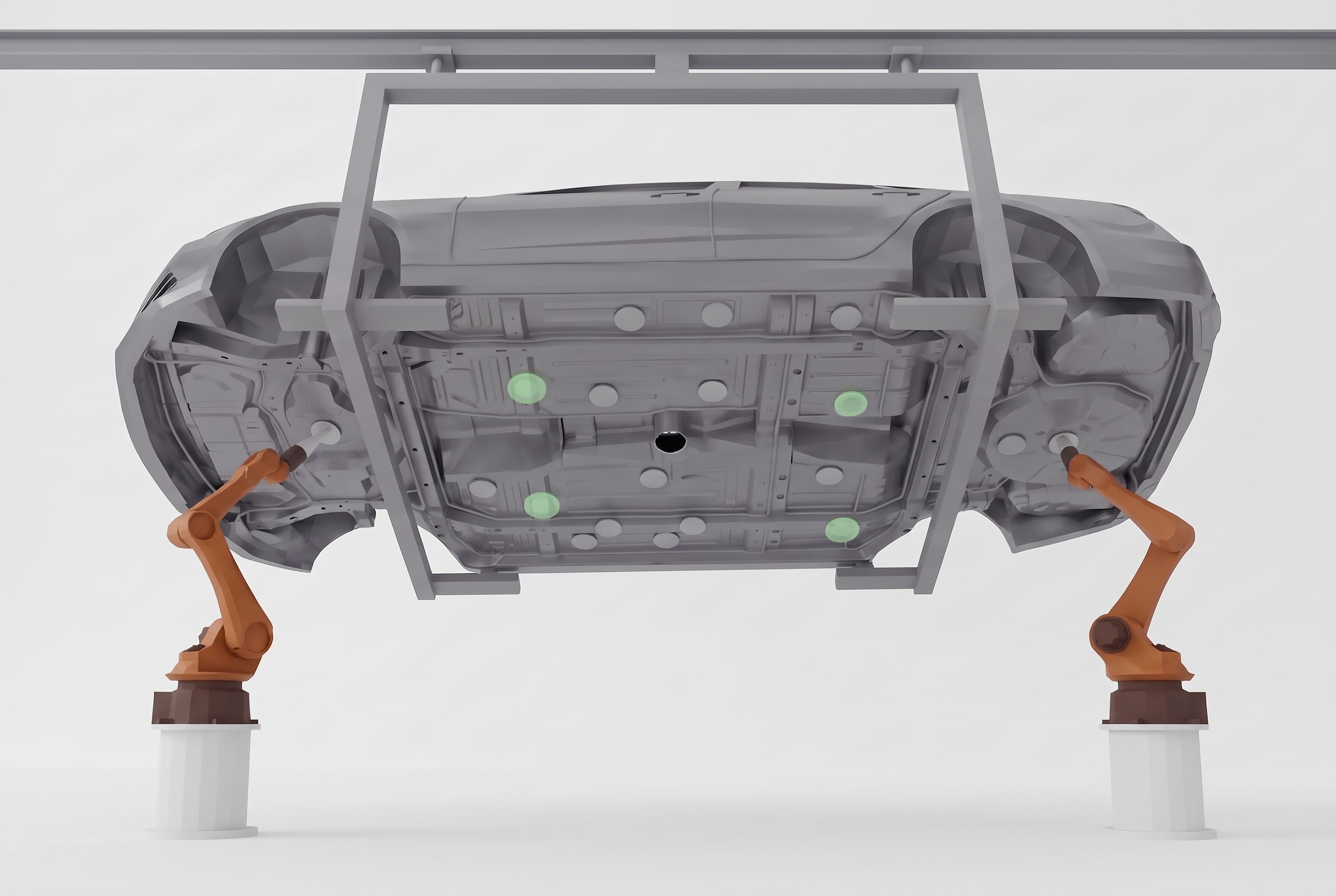
Drainage and access openings in the body are closed with plugs, and damping pads are applied to defined panels — both must be present and correctly placed before the body moves on. VMT Plug & Pad Detection inspects both camera-based, using VMT's own AI to verify completeness and position reliably across the whole body.
Topcoat and clear coat are applied as the final visible paint layers, where robots need the body position accurately to work reliably. VMT provides the 3D body position as the reference for these paint operations.
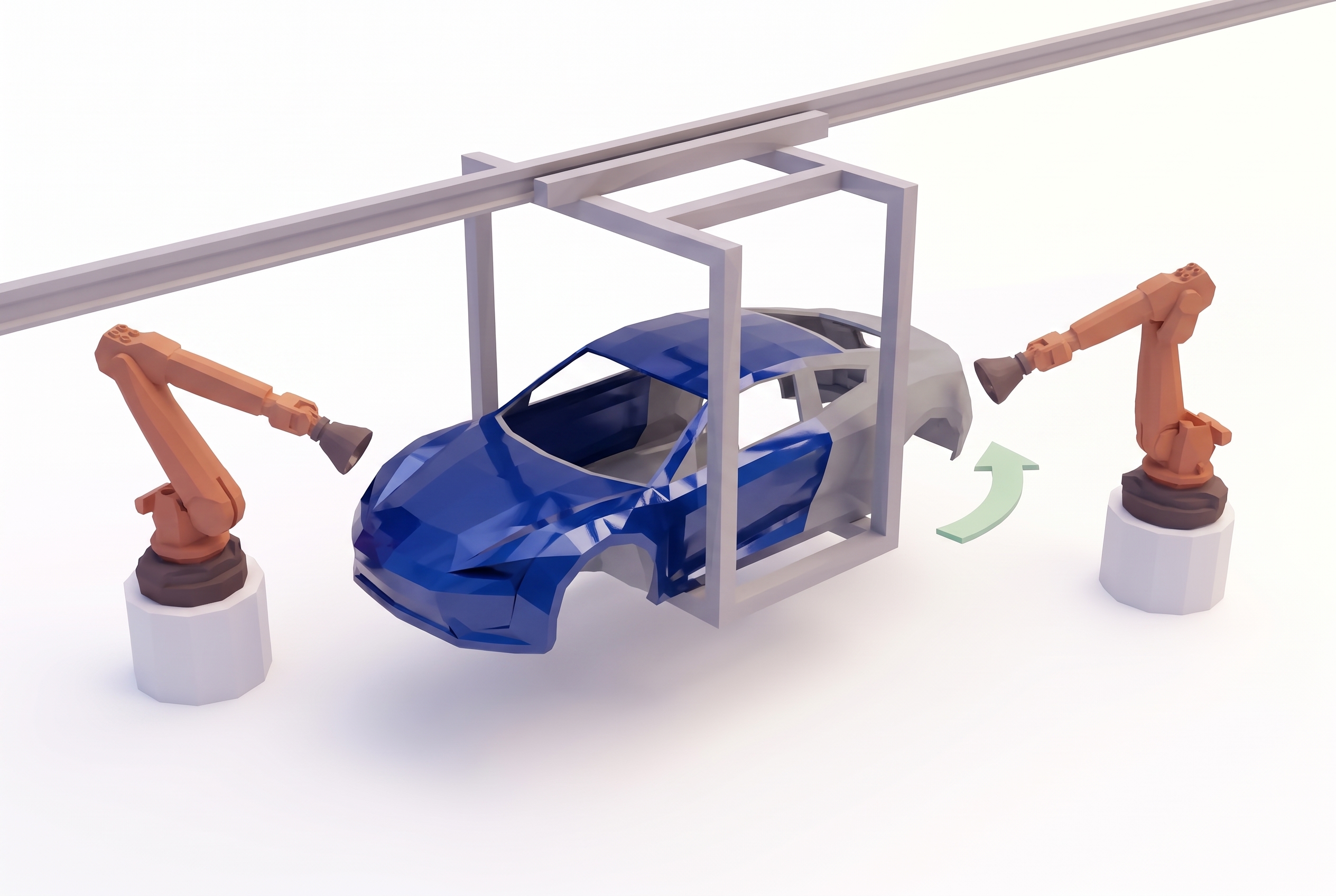
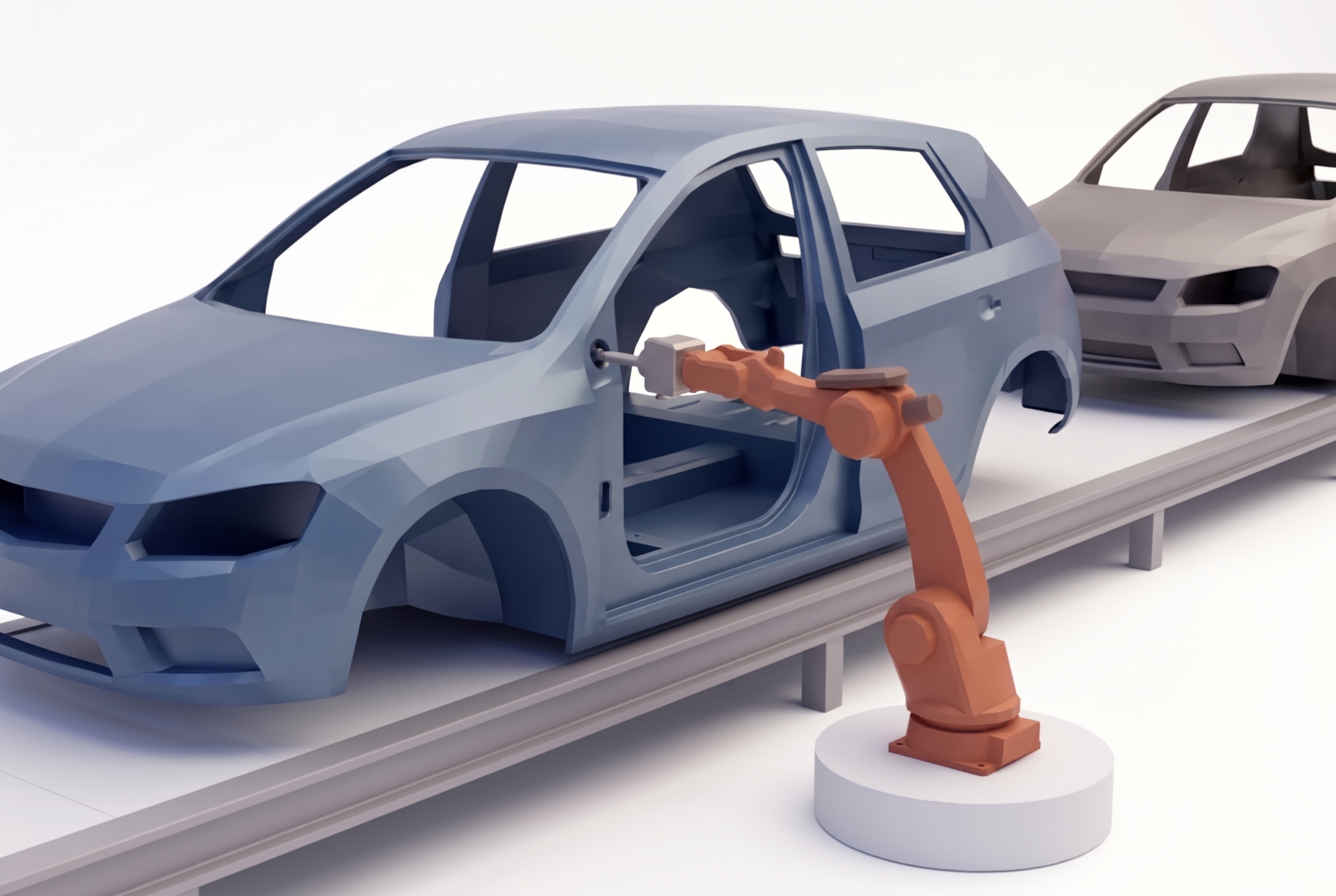
Cavities are filled with wax to protect the body against corrosion, often reaching confined areas through narrow openings. VMT BK guides the application robot precisely along the wax path, while VMT TwinCam locates openings for reliable insertion where the nozzle has to thread into tight spots. VMT BK enables fine, accurate wax application, and VMT ToolBox safeguards the process by checking the emitted wax jet itself.