Fill & Finish – Vials and ampoules

Every container tracked – from filling to batch release
Home
Life Science
Fill & Finish – Vials and ampoules
In fill-and-finish manufacturing, active ingredients are filled into vials and ampoules, sealed, and prepared for shipment. Each container leaves this area as a finished medicinal product ready for distribution.
High production speeds, transparent glass containers, and a wide variety of formats make inspection challenging. At the same time, regulatory requirements mandate complete, traceable documentation of unit counts for every batch.
In this area, VMT image processing systems handle tasks that cannot be reliably performed manually: monitoring the filling process and tracking the exact count of containers across the entire batch.

One Process. Every Step Covered.

The right technology at every stage.
01

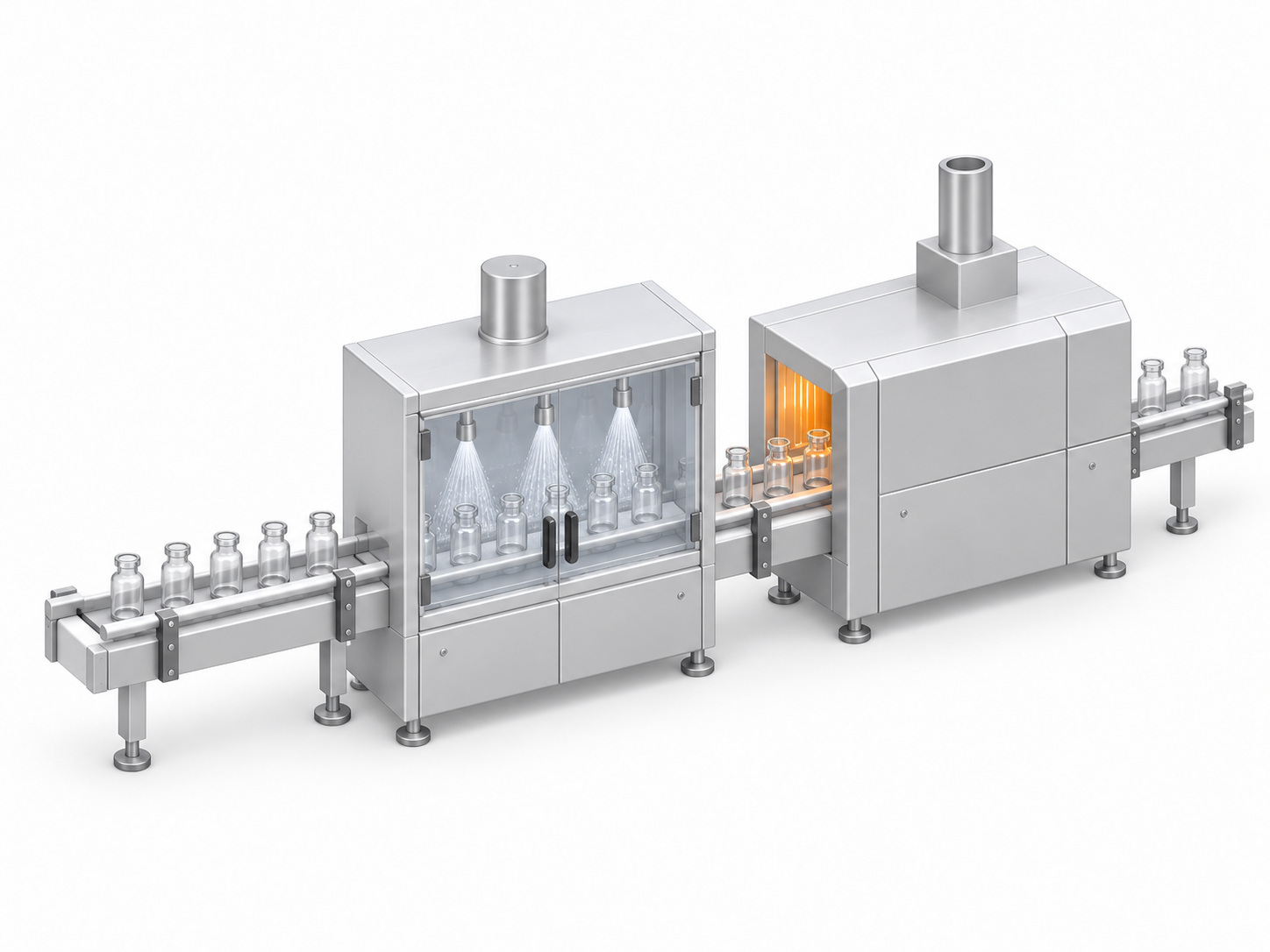
Container preparation

  • Empty vials and ampoules are fed in, washed, and depyrogenated in a tunnel. The containers leave this section sterile and dry, proceeding to the filling system.
  • The process is governed by thermal and hygienic requirements. Visual inspection tasks only arise upon entry into the filling line.
02

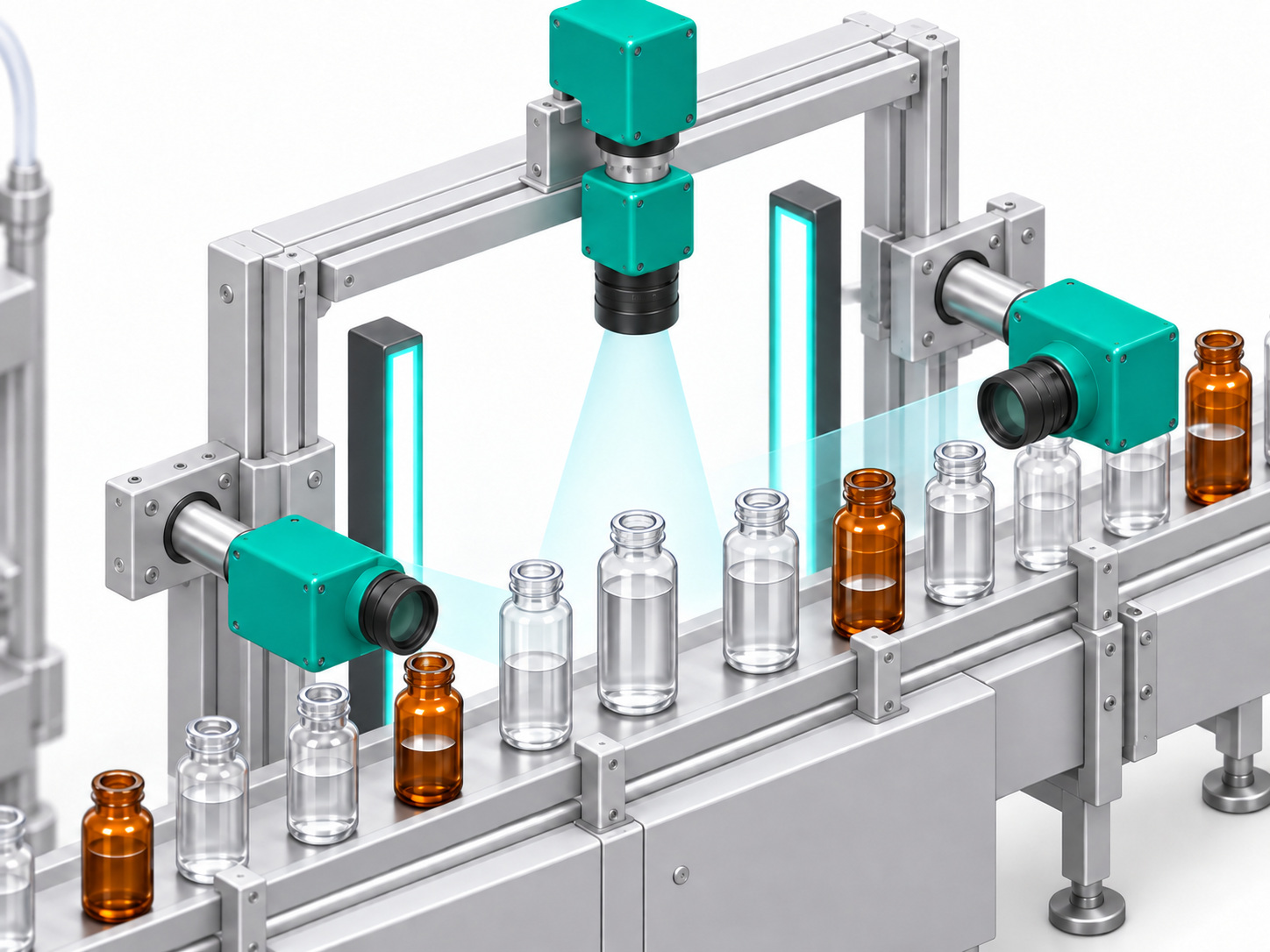
Filling and Dosing

  • The product is introduced into the container via metering pumps or peristaltic systems. The fill quantity determines the active ingredient dosage and, consequently, product compliance.
  • Requirements: Analysis through the container wall (for both transparent and colored glass); format changes without mechanical reconfiguration of the inspection station; detection of under- and overfilling at line speed.
  • The system measures the fill level or fill volume within the container. An undetected underfilled container results in under-dosing for the patient and, in the event of recurrence, a batch recall.
  • Technology: VMT Inspection Solutions
03

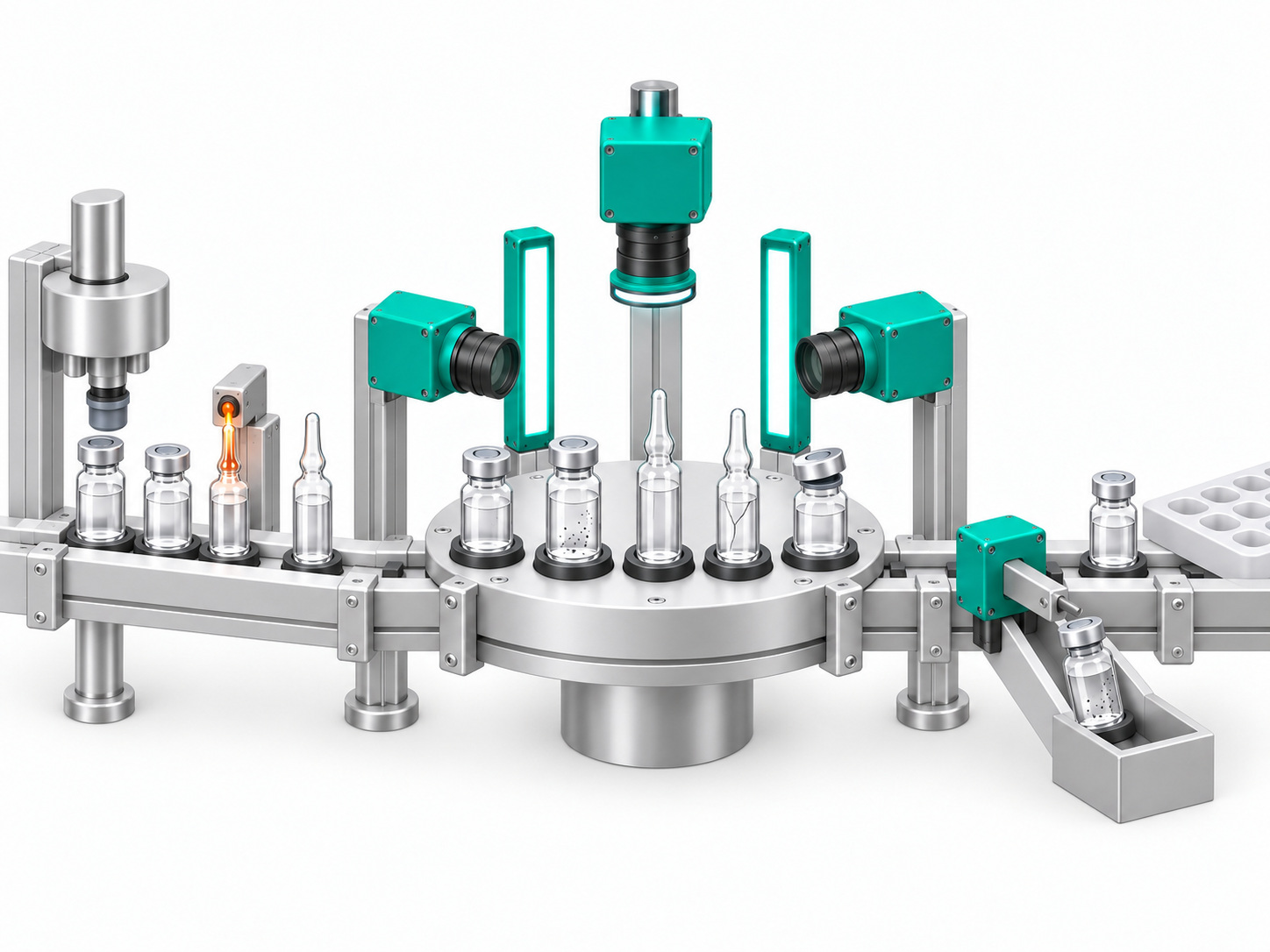
Sealing and final visual inspection

  • Vials are sealed with stoppers and crimp caps, while ampoules are sealed by melting the glass neck. Subsequently, the containers undergo a final visual inspection for particles, glass defects, and sealing errors.
  • Requirements: detection of defects and particles in transparent containers; very short cycle times.
  • Containers rejected at this stage leave the line before being loaded into trays. Consequently, the number of units in the tray systematically differs from the number of filled containers.
  • Technology: VMT Inspection Solutions
04

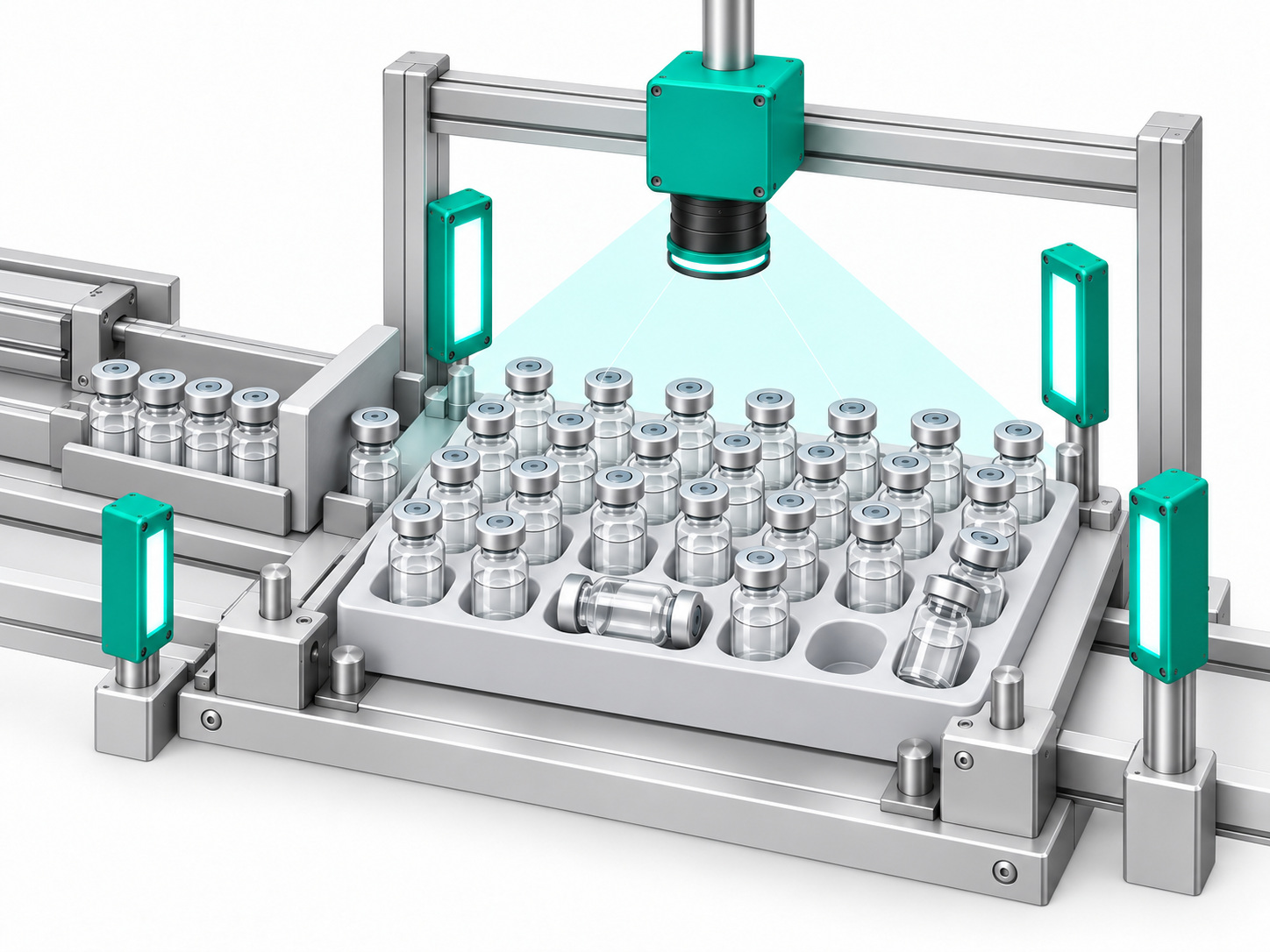
Loading into trays

  • The inspected containers are placed into trays or magazines. The tray loading configuration serves as the basis for all subsequent counting and documentation steps.
  • Requirements: capturing the entire tray surface area in a single image or via a scanning movement; distinguishing between upright and lying containers; reproducible positioning of the tray prior to analysis.
  • An inline check determines whether the tray is fully and correctly loaded and whether all containers are standing upright. A container that has fallen over or is tilted skews the count results and can damage neighboring containers during subsequent transport.
  • Technology: VMT MultiCount
05

Tray-based counting

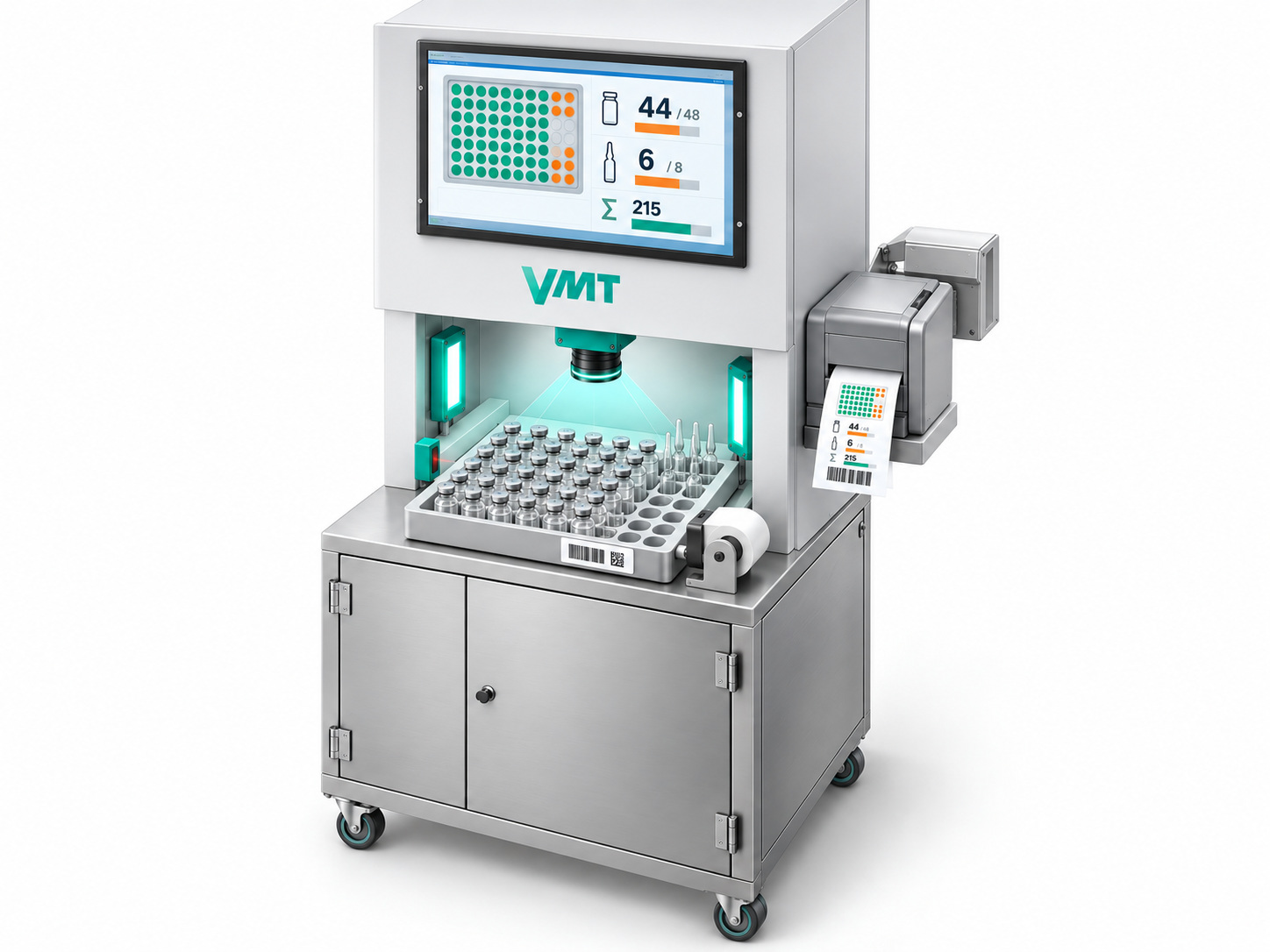
  • Each carrier is counted before leaving the filling line. Reconciliation verifies the actual number of containers produced in a batch and identifies where discrepancies occurred.
  • Requirements: Precise unit counting of vials and ampoules within the loaded carrier; automatic comparison of the counted quantity against the target specification for the carrier format; safeguards against double-counting a carrier; unique identification of the counted carrier immediately after measurement.
  • The system determines the number of containers in the carrier and calculates the running total for the batch. If the result deviates from the target, the discrepancy is classified as a "residual tray" or an "incorrect count," and the finding is documented. The result is printed on a label and affixed to the inspected carrier. Without reliable reconciliation, quantity discrepancies within a batch cannot be resolved; the batch remains blocked until a manual recount is performed.
  • Technology: VMT MultiCount
06

Labelling and packaging

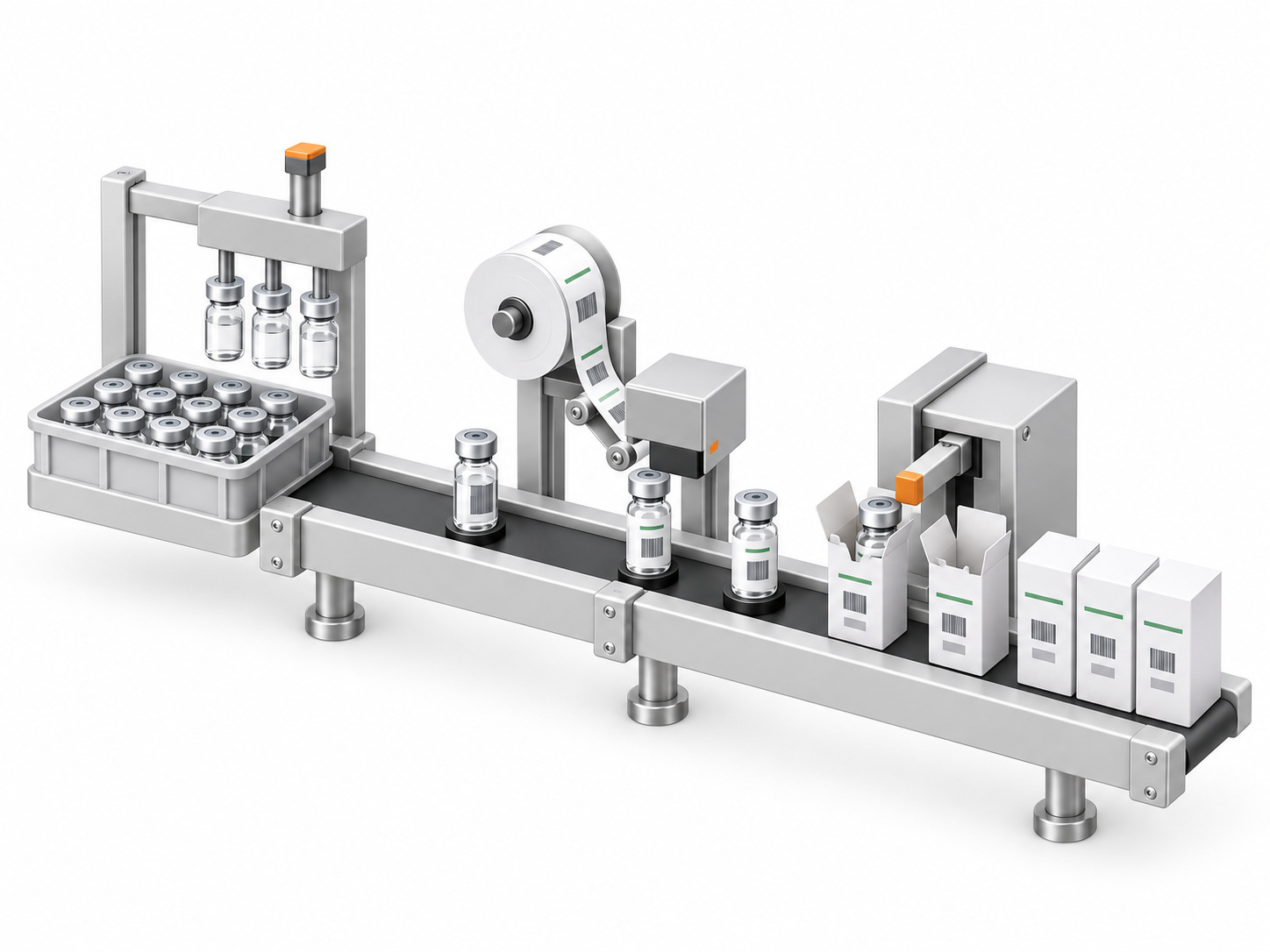
  • The containers are labeled, serialized and transferred to secondary packaging. The data applied connects the individual container with the batch documentation.
  • From this point on, the number of units produced is fixed. Corrections to the accounting are no longer possible downstream.
07

Batch Completion and Traceability

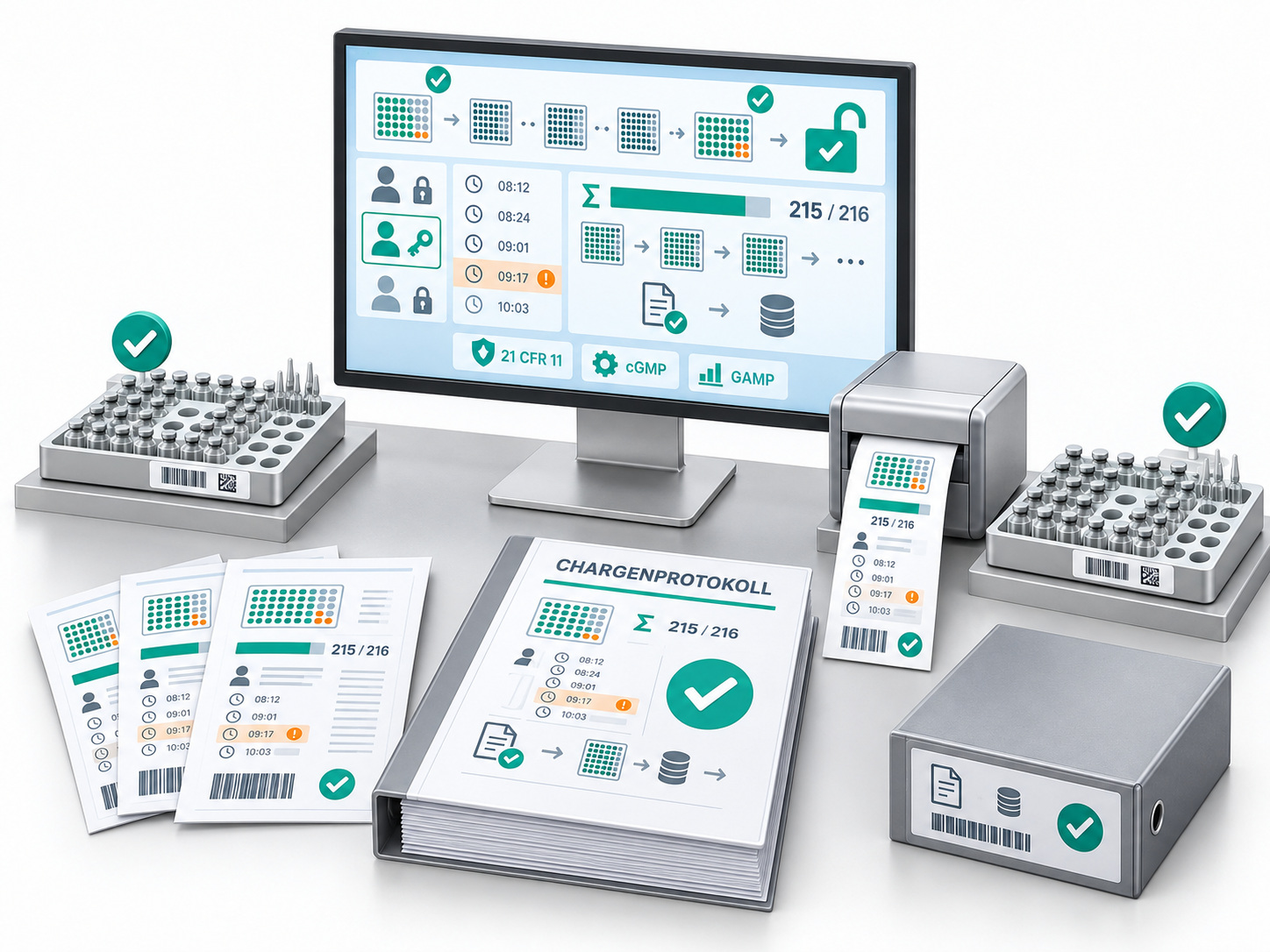
  • At the beginning and at the end of a batch, the functionality of the counting system is verified using a sample tray with a known occupancy. Finally, the batch data is merged.
  • Requirements: The batch is only released after a successful functional check; User management with access levels; Corrections only by logged in users; Automatic storage of interim reports and batch records. It is checked whether the sample tray with the stored target occupancy is recognized.
  • Counted carriers, total number of items and documented deviations are brought together across the batch and stored as a log. The system solution meets the requirements for user management and audit trail as required in environments according to 21 CFR Part 11, cGMP and GAMP.
  • Technology: VMT MultiCount

Back

Our team will be in touch as soon as possible.

FAST RESPONSE TIMES
EXPERT CONSULTING & SUPPORT
SOLUTION-DRIVEN APPROACH
01
02
03
04
Submit
Thank you! Your submission has been received!
Oops! Something went wrong while submitting the form.